Best practices for maintaining a radiant complexion through the decades
Your skin loses about half its ability to renew itself between your twenties and sixties, which means the skincare routine that worked at 25 won't cut it at 45. Each decade brings different challenges, from early prevention to advanced rejuvenation, and understanding these shifts is the key to maintaining healthy skin through decades. Whether you're just starting to notice changes or looking to refresh your approach, the right skincare practices by age can help you achieve a radiant complexion at any age.
Table of Contents
- The Science Behind Aging Skin
- Your 20s: Building a Strong Foundation
- Your 30s and 40s: Addressing Early Changes
- Your 50s and Beyond: Advanced Rejuvenation
- Your Personalized Path to Radiant Skin
- Common Questions About Age-Specific Skincare
The Science Behind Aging Skin
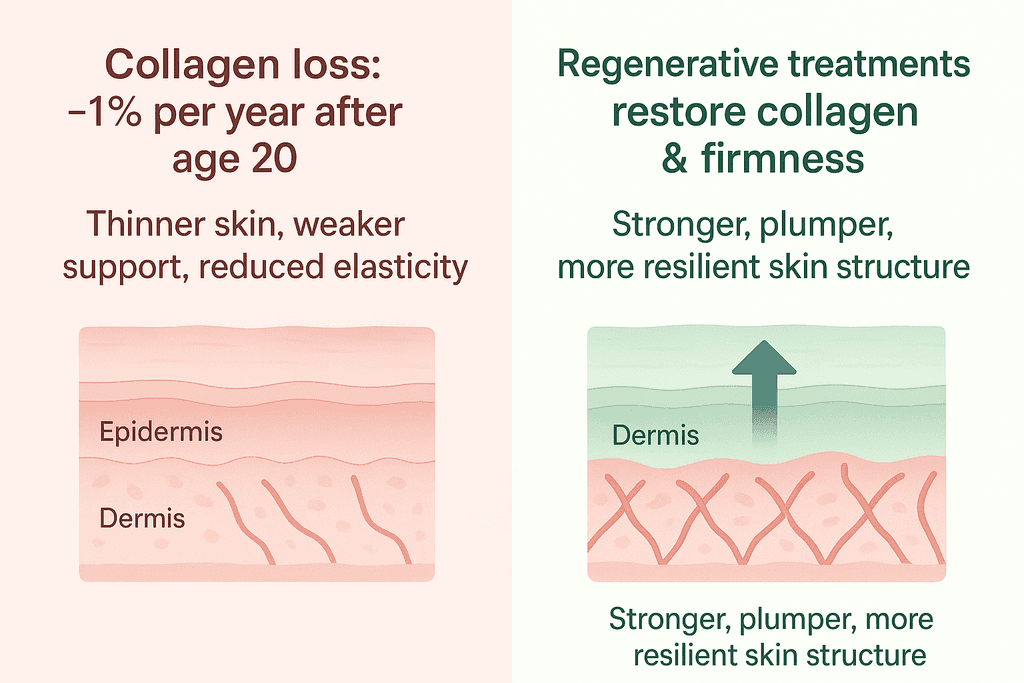
Your skin is basically a living clock that starts ticking differently once you hit your twenties. After age 20, your body produces about 1% less collagen every single year, which means by the time you're 50, you've lost roughly 30% of what keeps your skin firm and bouncy. This isn't just about wrinkles showing up—it's your entire skin structure changing from the inside out. The thickness of your skin decreases, oil glands slow down, and your ability to hold onto moisture drops significantly. What worked perfectly for your skin at 25 might do absolutely nothing at 45, and that's completely normal.
Hormones play a bigger role than most people realize. When estrogen levels shift during perimenopause and menopause, skin can lose elasticity fast and become noticeably drier within months. Men experience hormonal changes too, though usually more gradually, affecting how their skin repairs itself and responds to damage.
What Changes When
Different decades bring different challenges, and understanding what's happening beneath the surface helps explain why maintaining healthy skin through decades requires adjusting your approach over time.
| Decade | Key Biological Changes | Visible Effects |
|---|---|---|
| 20s | Collagen production begins declining, cell turnover slows slightly | First fine lines around eyes, occasional breakouts |
| 30s | Elastin breakdown accelerates, skin thickness decreases 6-7% | Deeper expression lines, early volume loss, uneven tone |
| 40s | Hormonal shifts begin, oil production drops 10-15% | Noticeable sagging, dryness, age spots appear |
| 50s+ | Collagen loss reaches 30%+, moisture retention declines significantly | Deeper wrinkles, thinner skin, loss of facial volume |
Why Environment Matters More Than Genetics
Here's something most people get wrong—genetics only account for about 20-30% of how your skin ages. The other 70-80% comes down to environmental factors and lifestyle choices. Sun exposure alone is responsible for up to 80% of visible facial aging, which is why two people born the same year can look decades apart.
Environmental factors that speed up aging include:
- UV radiation breaking down collagen and elastin fibers
- Pollution creating free radicals that damage skin cells
- Smoking reducing blood flow and oxygen to skin tissue
- Poor sleep preventing proper cellular repair
- High sugar diets causing glycation that stiffens collagen
The good news is that skincare practices by age can actually slow down or even partially reverse some of this damage. At Caleyo Wellness, we use AI-powered Skin Analysis Systems to measure exactly what's happening with your skin's hydration, elasticity, and pigmentation at a cellular level, so treatments can target your specific decade-related changes.
The Moisture and Oil Problem
Your skin's ability to produce natural oils peaks in your teens and twenties, then steadily declines. By your fifties, oil production can drop by 50% or more, which is why that radiant complexion at any age becomes harder to maintain without adjusting your routine.
What happens to skin's protective barrier over time:
- Sebaceous glands shrink and produce less protective sebum
- Natural moisturizing factors in the skin decrease
- Water loss through the skin increases by up to 40%
- The skin's pH balance shifts, making it more vulnerable
This is why the same moisturizer that felt too heavy in your twenties might barely be enough in your forties. Your skin isn't being difficult—it's literally working with different biological resources.
Your 20s: Building a Strong Foundation
Your skin in your 20s might look pretty good without much effort, but this is actually the most important decade for prevention. Think of it like saving money early—the habits you build now will pay off for years to come. Most people don't realize that sun damage starts accumulating long before you see visible signs, which means that beach day without sunscreen is affecting your skin even if you can't tell yet. The good news is that your skin is still producing plenty of collagen and has strong repair mechanisms, so this is the perfect time to lock in healthy skincare practices.

Your 20s: Building a Strong Foundation
The foundation of any good routine starts simple. You need a gentle cleanser that removes dirt and makeup without stripping your skin, and a moisturizer that keeps your skin barrier healthy. But here's what really matters: sun protection is the single most important anti-aging step you'll ever take.
Essential Skincare Steps for Your 20s
- Use a broad-spectrum SPF 30 or higher every single day, even when it's cloudy
- Cleanse your face morning and night to remove buildup
- Apply a moisturizer suited to your skin type
- Start using a retinol product a few nights per week to boost cell turnover
- Add a vitamin C serum in the morning for antioxidant protection
- Get 7-8 hours of sleep and drink plenty of water
If you're dealing with acne or early sun damage, this is the time to address it. Active ingredients like retinol and vitamin C can help with both prevention and correction. During a skincare consultation, we use AI-powered skin analysis to look at what's happening beneath the surface—things like hydration levels and early pigmentation that you can't see in the mirror yet.
Your lifestyle choices matter more than you might think. Late nights, stress, and dehydration all show up on your face eventually. Building good habits now means maintaining that radiant complexion at any age becomes much easier down the road.
Your 30s and 40s: Addressing Early Changes
This is when things start to shift. You might notice fine lines around your eyes when you smile, or that your skin doesn't bounce back quite as fast as it used to. Collagen production starts declining about 1% per year after age 30, and you're probably dealing with more stress, hormonal changes, and maybe less sleep than you'd like. The skincare routine that worked in your 20s might not be cutting it anymore. But this doesn't mean you need to panic—it just means it's time to level up your approach to maintaining healthy skin through decades.
Your 30s and 40s: Addressing Early Changes
Many people wonder when to start treatments like neurotoxins. The answer is simpler than you'd think: when you start seeing lines that bother you, or when you want to prevent them from getting deeper. Neurotoxins like Botox work by relaxing the muscles that create expression lines, and starting earlier often means you need less product and get better results.
Treatment Options by Concern
| Concern | In Your 30s | In Your 40s |
|---|---|---|
| Fine Lines | Preventive neurotoxins, retinol | Regular neurotoxins, chemical peels |
| Volume Loss | Minimal filler, skin boosters | Strategic filler placement, microneedling |
| Texture Issues | Light chemical peels, AQUAGOLD | Deeper peels, microneedling |
| Dullness | Medical-grade facials | Skin boosters, combination treatments |
Dermal fillers become more relevant as you lose volume in areas like your cheeks and under your eyes. The goal isn't to look different—it's to look like yourself, just refreshed. Treatments like AQUAGOLD deliver customized solutions directly into your skin through tiny micro-channels, combining hydration, vitamins, and other ingredients tailored to what your skin needs.
Hormonal changes can throw everything off, especially as you approach perimenopause. Your skin might get drier, more sensitive, or break out in ways it never did before. This is where treatments like microneedling and chemical peels can help reset your skin texture and boost collagen production naturally.
Your 50s and Beyond: Advanced Rejuvenation
By your 50s, you're dealing with more significant changes. Menopause brings a drop in estrogen that affects everything from skin thickness to moisture retention. You might notice more pronounced volume loss, deeper lines, and changes in skin texture that weren't there before. Your skin is also slower to heal and regenerate, which means you need smarter, more comprehensive approaches. But here's what most people don't realize—this is also when regenerative treatments can make the biggest difference because they work with your body's natural healing processes.
Volume loss becomes a major concern at this stage. Your face loses fat in specific areas, which can create a tired or hollow appearance. Strategic use of dermal fillers can restore structure, but the key is working with someone who understands facial anatomy and aging patterns.
Regenerative treatments like AutoCorre® take a different approach by stimulating your own collagen and elastin production. This proprietary treatment accelerates your skin's natural repair mechanisms, creating improvements that build over time rather than just filling space. It's only available at certified centers, and the results tend to be more natural-looking because you're enhancing what's already there.
Key Benefits of Regenerative Approaches
- Stimulates natural collagen synthesis for lasting improvements
- Works at the cellular level to address aging from the inside out
- Results continue to improve over several months
- Can be combined with other treatments for comprehensive rejuvenation
What you put into your body matters just as much as what you put on your skin. NAD+ IV therapy supports cellular energy production and can improve skin quality from within by enhancing mitochondrial function. Many people notice better skin texture, improved healing, and more energy overall. Proper nutrition, targeted supplementation, and treatments like customized IV drips all support your skin's ability to repair and maintain itself.
The most effective approach at this stage combines multiple treatments. You might use neurotoxins for dynamic lines, fillers for volume, microneedling or chemical peels for texture, and regenerative treatments for overall skin quality. Using AI-powered skin analysis helps track exactly what's changing and what's working, so your treatment plan can adjust as your skin responds.
Managing menopause-related changes requires patience and the right support. Your skin might be drier, thinner, and more sensitive than ever before. But with the right combination of medical-grade skincare, professional treatments, and attention to overall wellness, you can maintain healthy, vibrant skin well into your later years.
Your Personalized Path to Radiant Skin
Your skin changes with every decade, and what worked in your twenties won't cut it in your forties. The good news is that maintaining healthy skin through decades doesn't have to be complicated once you understand what your skin actually needs at each stage. Starting early makes everything easier down the road, but it's never too late to see real improvement. The key is matching your skincare practices by age with the right professional treatments and at-home routines.
Professional treatments work hand-in-hand with what you do at home. Things like microneedling, chemical peels, and dermal fillers can address concerns that creams alone can't fix. At Caleyo Wellness, we use AI-powered skin analysis to figure out exactly what your skin needs based on hydration levels, elasticity, pigmentation, and texture.
The truth is, there's no one-size-fits-all approach to getting a radiant complexion at any age. Your skin is as unique as you are, which is why personalized assessment matters so much. What works for your friend might not work for you, and that's completely normal.
Whether you're dealing with early fine lines, stubborn pigmentation, or loss of volume, the right combination of treatments can make a real difference. The questions below cover some of the most common concerns we hear about age-specific skincare.
Common Questions About Age-Specific Skincare
Taking care of your skin gets more confusing as you age, especially when everyone seems to have different advice about what works and when to start. The truth is that skincare practices by age aren't one-size-fits-all, and what your friend swears by might not be right for your skin type or life stage. These are the questions we hear most often from people trying to figure out the best approach for maintaining healthy skin through decades.
When should I start preventive treatments like Botox?
Most people benefit from starting neurotoxin treatments in their late twenties to early thirties, once they notice lines forming even when their face is relaxed. The goal isn't to freeze your face but to prevent deep wrinkles from setting in permanently. Starting earlier with smaller doses often means you'll need less product over time and can maintain a more natural look while achieving a radiant complexion at any age.
Can I reverse sun damage from my younger years?
Yes, but it takes a combination approach. Treatments like chemical peels, microneedling, and skin boosters can significantly improve pigmentation, texture, and overall skin quality that sun exposure damaged years ago. At Caleyo Wellness, we use an AI-powered Skin Analysis System to map exactly where damage exists beneath the surface, so we can target those specific areas with the right treatments for your skin.
How do I know which treatments are right for my age?
A professional skincare consultation is the best starting point because your skin's actual condition matters more than the number of candles on your birthday cake. Someone in their forties with great sun protection habits might need less intervention than someone in their thirties who tanned regularly. We look at hydration levels, elasticity, pigmentation, and your specific goals to build a plan that makes sense for where your skin is right now.
What's the difference between skin boosters and fillers?
Skin boosters are injected into the skin itself to improve hydration, texture, and overall quality from within, while fillers add volume to specific areas like cheeks, lips, or under-eye hollows. Think of boosters as improving the canvas and fillers as reshaping the structure. Many people benefit from both as part of their skincare practices by age, especially once collagen production naturally slows down.
How often should I get professional treatments?
It depends entirely on what you're getting done and your skin's response. Neurotoxins typically last three to four months, while treatments like microneedling or chemical peels might be done monthly or quarterly. Consistency matters more than intensity when it comes to maintaining healthy skin through decades, so we usually recommend starting with a treatment plan and adjusting based on how your skin responds.
Are there treatments suitable for all skin tones?
Absolutely, though the approach and specific products might vary. Darker skin tones can be more prone to hyperpigmentation or keloid scarring, so treatment protocols need to be adjusted accordingly. At Caleyo Wellness, we work with all skin tones and customize everything from chemical peel strength to laser settings to ensure safe, effective results that help you achieve a radiant complexion at any age without unwanted side effects.