Comparing AI and Manual Methods for Body Composition Tracking
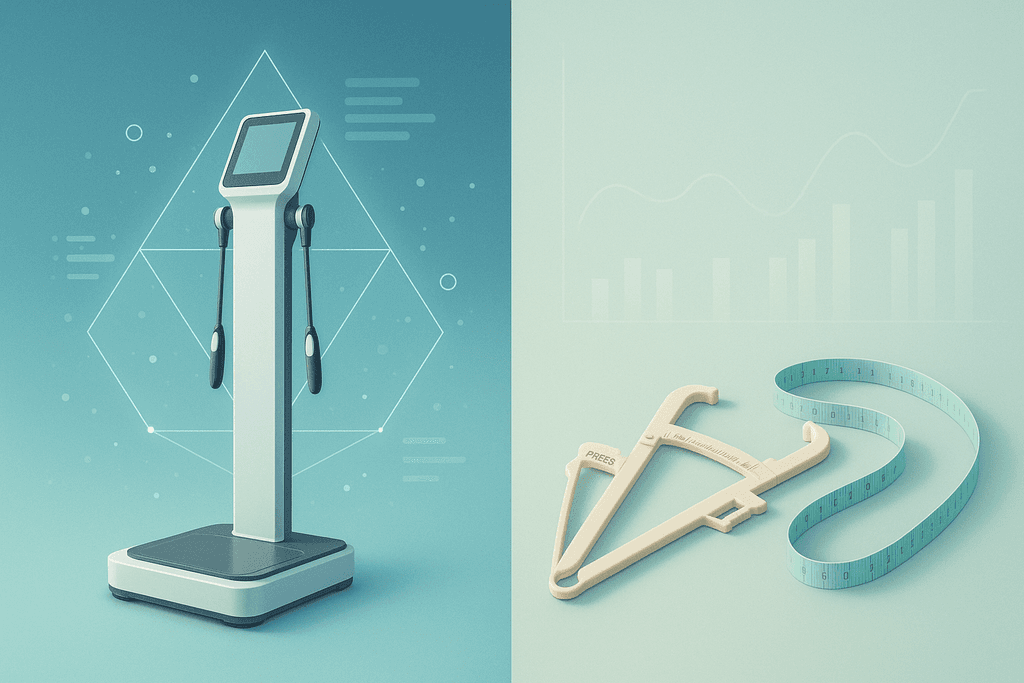
Why Your Tracking Method Matters More Than You Think
You step on the scale every morning and see the same number, but your clothes fit differently and your energy has changed. Most people tracking their body transformation focus on weight alone, completely missing that the method you use to measure progress can be the difference between staying motivated and giving up halfway through. Whether you're using basic calipers or advanced AI body composition scanners like the 3D technology at Caleyo Wellness, your tracking tool shapes how accurately you see results and how effectively you can adjust your plan.
Table of Contents
- Why Your Tracking Method Matters More Than You Think
- The Evolution of Body Tracking Technology
- How Manual Body Composition Methods Actually Work
- What AI Body Composition Scanners Bring to the Table
- Accuracy and Consistency Face-Off
- Cost, Convenience, and Real-World Practicality
- Which Method Actually Delivers Better Results
- Making the Right Choice for Your Body Goals
- Common Questions About Body Tracking Methods
The Evolution of Body Tracking Technology
Body composition tracking has come a long way since doctors first started measuring patients with simple tape measures and scales in the 1950s. Back then, the only way to know if you were making progress was to step on a scale and hope the number went down. But weight alone doesn't tell you much about what's actually happening inside your body. Are you losing fat or muscle? Is your metabolism improving? Traditional methods couldn't answer these questions with any real accuracy.
The journey from basic measurements to today's AI body composition scanners took decades of research and technological breakthroughs. Each new method tried to solve the problems of the one before it, but most still required trained professionals, expensive equipment, or uncomfortable procedures that people dreaded.
How We Used to Track Body Composition
For most of the 20th century, tracking body composition meant dealing with one of these manual body fat measurements:
- Skinfold calipers that pinched your skin in multiple spots (ouch)
- Underwater weighing tanks that required you to exhale completely while submerged
- Bioelectrical impedance scales that gave wildly different readings based on hydration
- Tape measures and body mass index calculations that ignored muscle mass entirely
These methods had serious limitations. Caliper measurements depended heavily on who was doing the pinching. One study found that different technicians could get results that varied by up to 15% on the same person.
The Technology Shift
Things started changing in the early 2000s when medical imaging technology became more accessible. DEXA scans, originally designed for bone density, could suddenly show body fat distribution. MRI and CT scans offered even more detail but cost hundreds of dollars per session.
The real breakthrough came when artificial intelligence entered the picture. Research shows that AI-based analysis of body composition can now predict health outcomes with remarkable accuracy. At Caleyo Wellness, our 3D Body Scanner uses this same AI technology to give you detailed body composition data without any of the hassle of older methods.
Tracking Methods Through the Decades
| Era | Primary Method | Key Characteristics | Accuracy Level |
|---|---|---|---|
| 1950s-1970s | Tape Measures & Scales | Simple, cheap, no body composition data | Low |
| 1980s-1990s | Skinfold Calipers | Manual pinching, operator-dependent | Moderate |
| 2000s-2010s | Bioelectrical Impedance | Quick but affected by hydration | Moderate |
| 2010s-Present | DEXA & Medical Imaging | Accurate but expensive, radiation exposure | High |
| 2020s-Present | AI-Powered 3D Scanning | Fast, precise, visual tracking, no radiation | Very High |
Understanding this evolution helps explain why body tracking technology pros and cons matter so much when choosing a method. What worked twenty years ago might not be the best option today, especially when newer technology can give you better results in less time.
How Manual Body Composition Methods Actually Work
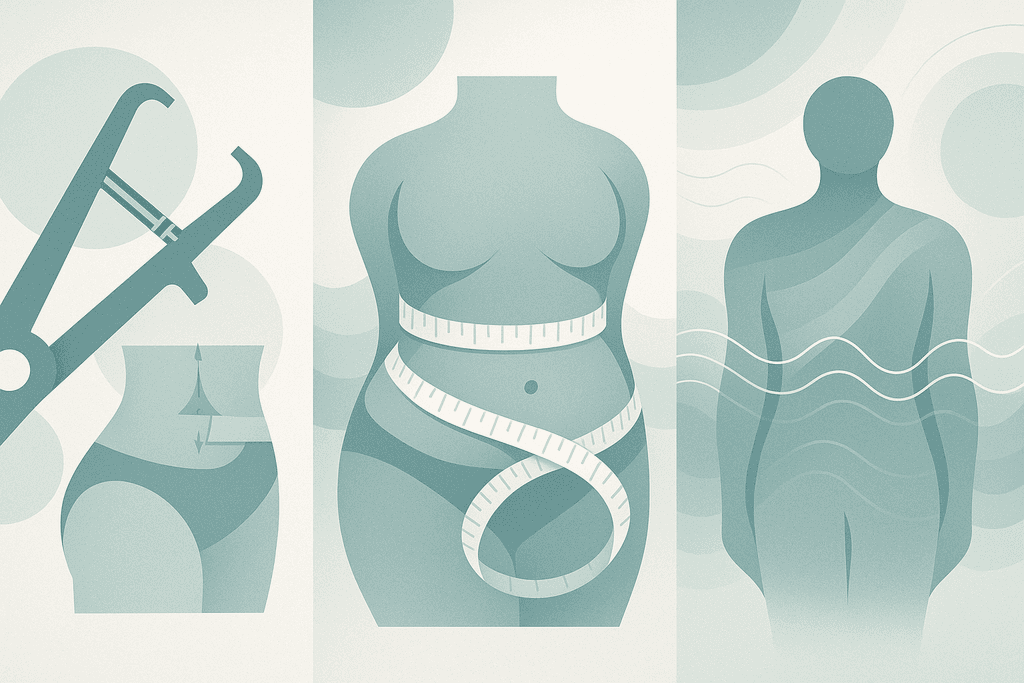
Most people trying to track their body composition start with the basics. You grab a tape measure, step on a scale, or maybe invest in a pair of calipers if you're feeling ambitious. These manual body composition tracking methods have been around for decades, and they work by measuring different aspects of your body to estimate fat percentage and muscle mass. Skinfold calipers pinch your skin at specific spots like your triceps, abdomen, and thighs to measure the thickness of subcutaneous fat sitting just under your skin. Tape measurements track how your waist, hips, arms, and legs change over weeks or months. Bioelectrical impedance scales send a tiny electrical signal through your body and measure how fast it travels, since muscle conducts electricity differently than fat does.
How Manual Body Composition Methods Actually Work
The problem is that all these methods depend heavily on technique. If you pinch the caliper at a slightly different angle or measure your waist an inch higher than last time, your numbers will be off.
Common challenges with manual tracking:
- Results vary based on who's doing the measuring
- Time of day affects measurements (hydration, food intake, etc.)
- Requires consistent technique every single time
- User error is almost impossible to eliminate completely
- Hard to track changes in specific body regions accurately
Research shows that manual methods can vary by 5-10% between measurements, even when done by trained professionals. That's a huge margin when you're trying to figure out if your program is actually working.
What AI Body Composition Scanners Bring to the Table
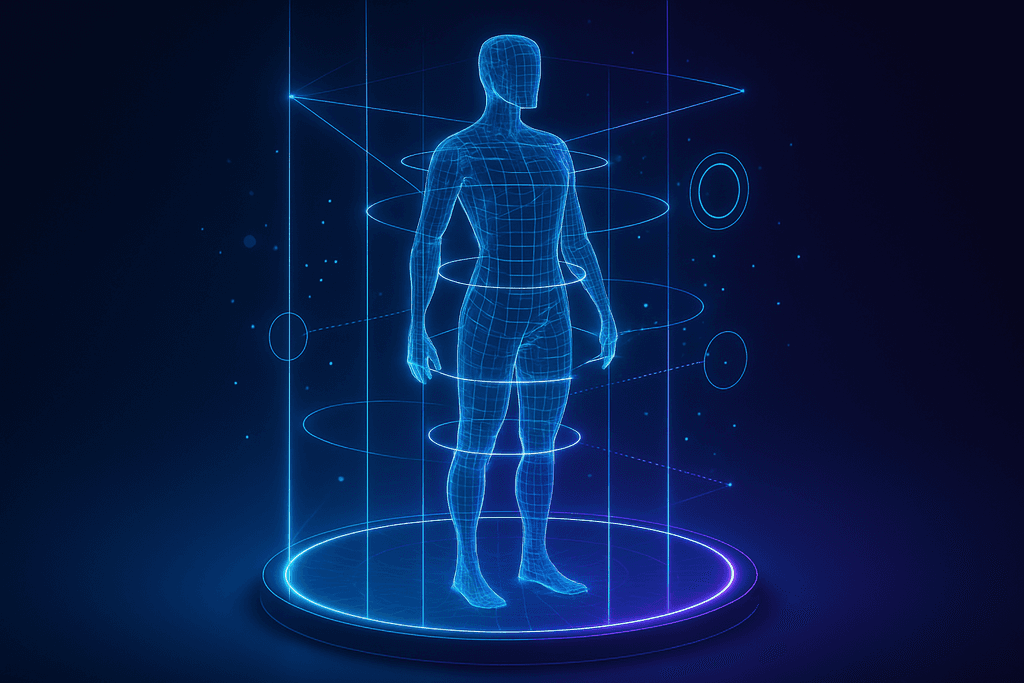
AI-powered 3D body scanners work completely differently. You step onto a platform, and the scanner rotates around you, capturing thousands of data points in about 30 seconds. The technology creates a complete digital model of your body that looks like something out of a sci-fi movie. AI algorithms then analyze hundreds of measurements simultaneously, tracking everything from your shoulder width to the circumference of your left thigh at multiple points. What makes this different from someone with a tape measure is that the AI removes human error from the equation entirely.
What AI Body Composition Scanners Bring to the Table
The scanner doesn't get tired, doesn't measure at slightly different spots, and doesn't have an off day. It captures the same data points in exactly the same way every single time.
Key advantages of AI scanning technology:
- Creates visual progress tracking you can actually see
- Tracks changes in specific body regions with millimeter precision
- Provides data-driven insights for program adjustments
- Eliminates the guesswork from measuring progress
- Generates consistent, repeatable results every scan
Our 3D Precision Body Tracking uses ShapeScale technology for this kind of comprehensive analysis. The system captures over 1,200 measurements in a single scan and shows you a side-by-side comparison of your body over time. According to research comparing automated versus manual analysis, AI-powered systems show significantly better consistency and reliability than traditional methods.
Accuracy and Consistency Face-Off
When it comes to tracking body composition, consistency matters more than single-point accuracy. You could have the most accurate measurement in the world, but if you can't replicate it next week, the data becomes useless for tracking progress. AI scanners achieve accuracy within millimeters, but more importantly, they deliver that same level of precision every single time. Manual methods struggle here because even small variations in technique create big differences in results.
Accuracy and Consistency Face-Off
Think about it this way: if you measure your waist with a tape measure, are you pulling it tight or letting it rest loosely? Are you measuring at your belly button or an inch above it? Are you breathing in or out?
| Factor | AI Scanners | Manual Methods |
|---|---|---|
| Measurement Accuracy | Within millimeters | 5-10% variation |
| Consistency Between Sessions | Identical every time | Depends on technique |
| User Error Impact | Eliminated | High |
| Data Points Captured | 1,200+ | 5-10 |
Environmental factors affect both methods, but in different ways. Manual measurements can be thrown off by hydration levels, recent meals, or even the temperature of the room. AI scanners are more stable but still account for these variables in their algorithms. The real difference is that skill level dramatically impacts manual measurement results, while AI removes that variable entirely.
Cost, Convenience, and Real-World Practicality
Let's talk about the practical side of things. A tape measure costs five bucks, and you can use it in your bathroom whenever you want. Manual tools are inexpensive and widely accessible, which is why most people start there. AI scanners require professional facilities and trained staff, so you can't just do it at home on a Tuesday morning. The upfront cost difference is obvious, but the real question is about long-term value and what you're actually trying to achieve.
If you're casually tracking general progress and don't need precise data, manual methods might work fine. But if you're serious about body transformation and want to know exactly what's working, the investment changes the game.
Practical considerations to think about:
- Manual tracking requires discipline to measure consistently
- AI scans take 30 seconds versus 10-15 minutes for manual measurements
- Frequency matters: weekly manual tracking adds up in time investment
- Professional guidance comes built-in with AI scanning services
- Data visualization helps you stay motivated and see real changes
Our programs include regular 3D scans as part of comprehensive tracking, so you're not just getting measurements. You're getting actionable insights that help adjust your nutrition, training, and treatment plans in real-time. Studies on fully automated AI body composition measures show that this level of precision leads to better outcomes because you can make informed decisions instead of guessing.
The convenience factor varies based on your lifestyle. If you travel frequently or have an unpredictable schedule, manual methods give you flexibility. But if you're committed to a structured program and want the most accurate feedback possible, scheduled AI scans become part of your routine. The time investment differs significantly too: a proper manual measurement session takes 10-15 minutes if you're doing it right, while an AI scan captures everything in under a minute.

Which Method Actually Delivers Better Results
The truth is, there's no universal winner between AI body composition scanners and manual body fat measurements. Your specific goals should drive which tracking method you choose, not what sounds most impressive or what everyone else is doing. Someone training for a bodybuilding competition needs completely different data than someone just trying to stay healthy, and picking the wrong method can waste both time and money.
Here's what matters most when choosing your tracking approach. The level of precision you need directly correlates with how serious your transformation goals are. If you're making significant lifestyle changes or working with medical professionals on body composition, detailed data becomes essential for making smart adjustments.
Matching Methods to Goals
Different situations call for different levels of tracking sophistication. The key is being honest about what you're actually trying to achieve.
- Serious body transformation projects benefit most from precision tracking that catches small changes
- General fitness maintenance works fine with simpler manual measurements taken consistently
- Medical weight management programs require accurate data for safe medication adjustments
- Aesthetic goals like muscle definition need detailed body composition breakdowns
The Motivation Factor
Something interesting happens when people can see detailed progress visualizations. Motivation increases dramatically when you're looking at 3D body models showing exactly where you've lost fat or gained muscle, compared to just seeing numbers on a scale. At Caleyo Wellness, our 3D Precision Body Tracking using ShapeScale technology gives clients visual proof of changes they might not notice in the mirror yet.
- Visual progress tracking keeps people engaged longer than numbers alone
- Detailed metrics help identify what's working and what needs adjustment
- Data quality directly impacts how well your program can be customized
Real-World Tracking Scenarios
Consider these common situations. A 35-year-old professional trying to lose 50 pounds will get better results with AI-driven body composition monitoring that tracks visceral fat and muscle preservation during weight loss. Meanwhile, a college student maintaining their current fitness might do perfectly fine with monthly tape measurements.
Professional guidance maximizes the value of any tracking method you choose. Even the most advanced scanner won't help if you don't know how to interpret the data or adjust your program accordingly. That's where working with experienced providers makes the difference between having numbers and actually using them to get results.
- Combining methods can provide comprehensive insights for complex goals
- Regular professional review ensures you're interpreting data correctly
- Accountability from tracking appointments keeps you consistent
Making the Right Choice for Your Body Goals
Both AI body composition scanners and manual body fat measurements have their place in tracking progress. The real question is which one matches what you're trying to accomplish. If you're just keeping an eye on general fitness and don't need exact numbers, manual methods like calipers or tape measures can work fine for basic monitoring.
But here's where things get interesting. When you're serious about body transformation and want to see exactly what's changing, AI scanners offer a level of precision that manual methods simply can't match. Our 3D Precision Body Tracking uses ShapeScale technology to capture measurements down to the millimeter, showing you visual changes you might miss in the mirror or with a tape measure.
The body tracking technology pros and cons really come down to your commitment level. Professional weight optimization programs benefit most from advanced tracking because the data drives better decisions. You can see which areas are responding to treatment and adjust your plan based on real numbers, not guesswork.
Your goals should guide your choice. Someone wanting to lose a few pounds might be fine with a scale and measuring tape. But if you're investing time and money into a serious transformation, matching that commitment with accurate tracking just makes sense. The right method depends on how precise you need to be and what kind of results you're after.
Still have questions about which tracking method fits your situation? Let's clear up some common concerns.
Common Questions About Body Tracking Methods
Choosing the right way to track your body composition can feel overwhelming with so many options out there. People often wonder if they really need fancy technology or if a simple tape measure will do the job. The truth is, both AI body composition scanners and manual body fat measurements have their place, but understanding what works best for your specific goals makes all the difference. Here are the most common questions we hear about tracking methods and what actually matters when you're trying to see real progress.
How accurate are AI body scanners compared to manual methods?
AI body scanners are significantly more accurate than manual measurements because they eliminate human error and capture hundreds of data points in seconds. Manual methods like tape measures and calipers depend heavily on who's doing the measuring and where exactly they place the tool, which can vary by several inches or millimeters each time. AI scanners provide consistent, repeatable measurements down to the millimeter, giving you a true picture of changes happening in your body. At Caleyo Wellness, our 3D Body Scanner technology captures precise body composition metrics that would be impossible to track manually.
Can I get good results with just manual measurements?
You can definitely make progress with manual tracking, but you might miss subtle changes that keep you motivated. The scale doesn't tell you if you're losing fat while gaining muscle, and tape measures can't show you exactly where your body is changing. Manual methods work fine if you're just starting out or have a limited budget, but they make it harder to spot patterns or adjust your plan based on what's actually happening with your body composition.
How often should I track my body composition?
Most experts recommend tracking every two to four weeks for weight loss or body transformation goals. Checking too often can be discouraging because meaningful changes take time to show up, even when you're doing everything right. With AI body composition scanners, you get such detailed data that monthly scans give you plenty of information to work with. Daily weigh-ins are fine for general awareness, but save the comprehensive body tracking technology pros and cons analysis for less frequent check-ins.
Are AI body scanners worth the extra cost?
If you're serious about body transformation and want data-driven results, AI scanners are absolutely worth it. The detailed visualizations and precise measurements help you and your provider make smarter decisions about your nutrition, exercise, and treatment plans. You're not just guessing what's working because you can see exactly how your body responds to different approaches. Programs like our ShapeShift & Sustain use this technology to track progress and adjust your plan in real time, which is something manual body fat measurements simply can't offer.
What's the best method for tracking weight loss progress?
The best method combines multiple data points rather than relying on just one number. Your scale weight, body composition percentages, measurements, progress photos, and how your clothes fit all tell part of the story. AI body scanners pull all this together in one place, showing you visual changes alongside the numbers. This complete picture keeps you motivated even when the scale isn't moving, because you can see fat loss and muscle changes that matter more than total weight.
Do I need professional help to use these tracking methods?
You can do basic manual tracking on your own, but professional guidance helps you interpret the data and actually use it to improve your results. A tape measure tells you numbers, but it doesn't tell you what to do differently if those numbers aren't changing. Working with providers who understand body composition means you get actionable insights, not just measurements. At Caleyo Wellness, our dual board-certified team uses advanced tracking data to personalize your entire wellness plan, from nutrition to aesthetic treatments.