Comparing microneedling and micro-channeling for skin texture improvement
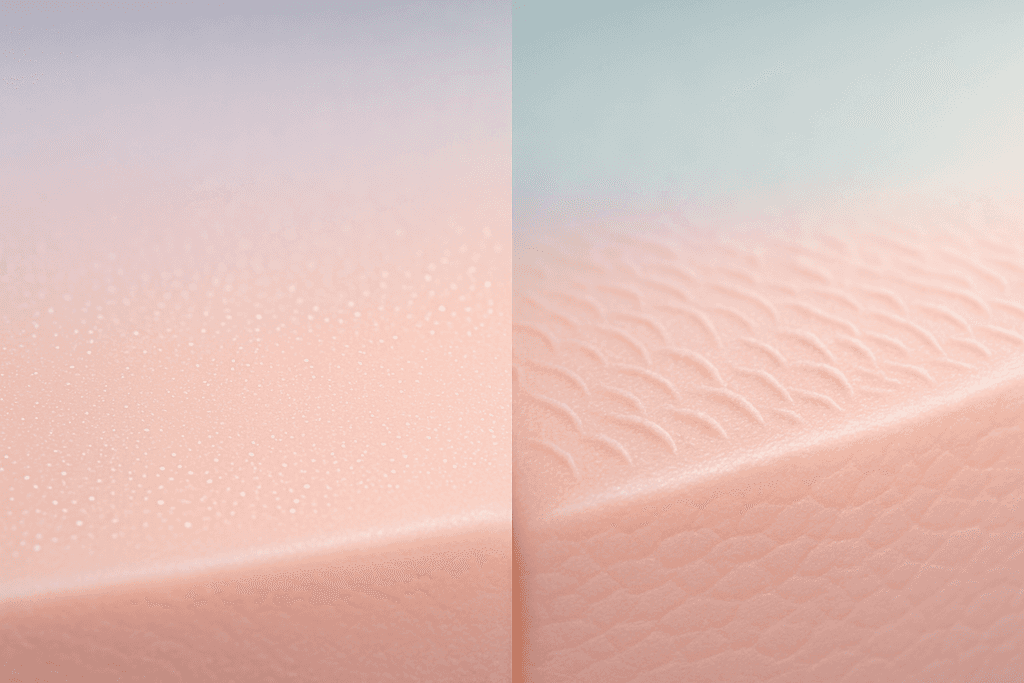
Rough, uneven skin texture is one of the top complaints dermatologists hear, and two needle-based treatments have emerged as go-to solutions for smoother, more radiant skin. Both microneedling and micro-channeling use tiny needles to kickstart your body's natural collagen production, but they work in slightly different ways. Understanding how each treatment approaches skin rejuvenation can help you choose the best path for your unique texture concerns.
Table of Contents
- How Needle-Based Skin Treatments Work
- What Makes Microneedling Different
- How Micro-Channeling Takes a Gentler Approach
- Which Treatment Fits Your Skin Goals
- Real Results and What to Expect
- Finding Your Perfect Skin Texture Solution
- Common Questions About Skin Texture Treatments
How Needle-Based Skin Treatments Work
Your skin is pretty smart when it comes to fixing itself. When it gets a small injury, it immediately starts making new collagen and elastin to repair the damage. This is exactly what microneedling vs micro-channeling treatments take advantage of. Both methods use tiny needles to create controlled micro-injuries in your skin, which sounds scary but is actually a carefully planned process. The needles are so small that they don't cause real damage, but they're just enough to wake up your skin's natural healing powers.
What Happens During Treatment
When those tiny needles poke into your skin, your body thinks it needs to heal something. This triggers a whole chain reaction of good things happening under the surface.
- Your skin sends special healing cells to the treated area
- Blood flow increases to bring nutrients and oxygen
- Collagen production kicks into high gear
- Elastin fibers start forming to make skin more flexible
- Old, damaged skin cells get replaced with fresh ones
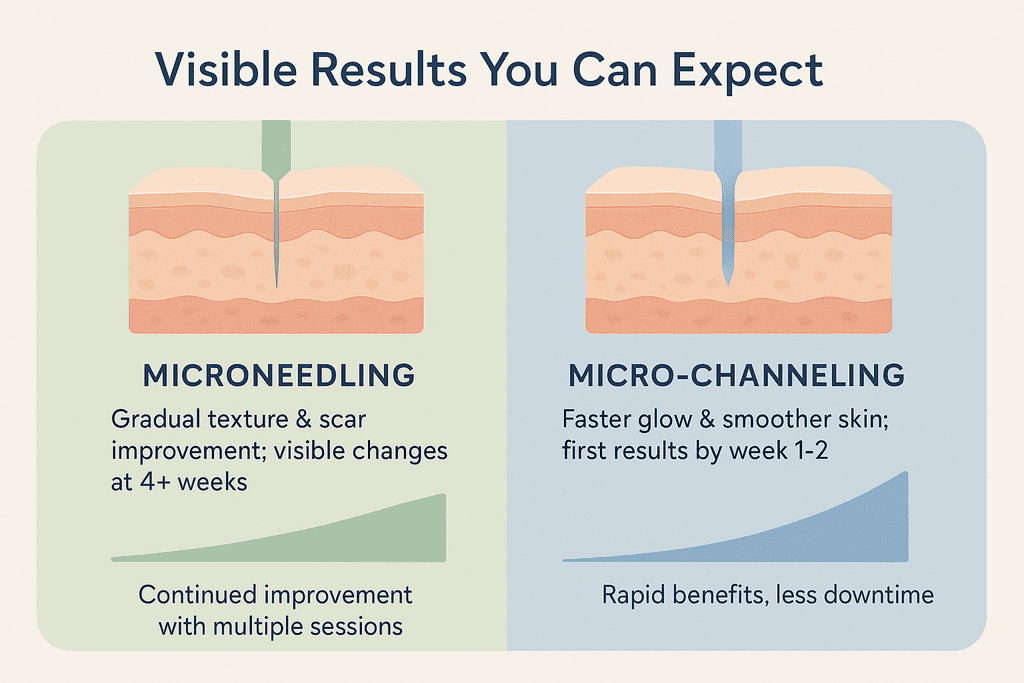
The best part is that you don't see results overnight, which actually means the treatment is working properly. New collagen takes time to form, usually showing up gradually over several weeks. Most people start noticing smoother skin texture around week four, with the best results appearing between weeks eight and twelve.
How These Treatments Evolved
Both skin texture treatments comparison options started with something called a dermaroller. This was basically a small wheel covered in needles that you rolled across your face. It worked okay, but it wasn't very precise and could be uncomfortable.
| Old Technology | Modern Devices |
|---|---|
| Manual dermarollers | Automated pen devices |
| Fixed needle depth | Adjustable depth settings |
| Dragging motion | Vertical stamping action |
| Less control | Precise targeting |
Today's devices are way more advanced. At Caleyo Wellness, we use precision equipment that can adjust needle depth based on what area we're treating and what your specific skin needs. The technology has gotten so much better that treatments are faster, more comfortable, and give better results than those old dermarollers ever could.
Why Controlled Injury Works
It might seem weird that poking holes in your skin makes it look better. But think about it like exercise for your muscles. When you work out, you're actually creating tiny tears in your muscle fibers. Those tears heal stronger than before, which is how you build muscle.
- Micro-injuries are shallow and heal quickly
- The healing process produces more collagen than was there before
- Results build up with each treatment session
- Your skin gets thicker and firmer over time
The key word here is "controlled." These aren't random injuries. When choosing skin rejuvenation techniques, you want a provider who knows exactly how deep to go and where to treat. Too shallow won't do much, and too deep can cause problems. That's why having experienced providers like the team at Caleyo Wellness matters so much when you're comparing your options.
What Makes Microneedling Different
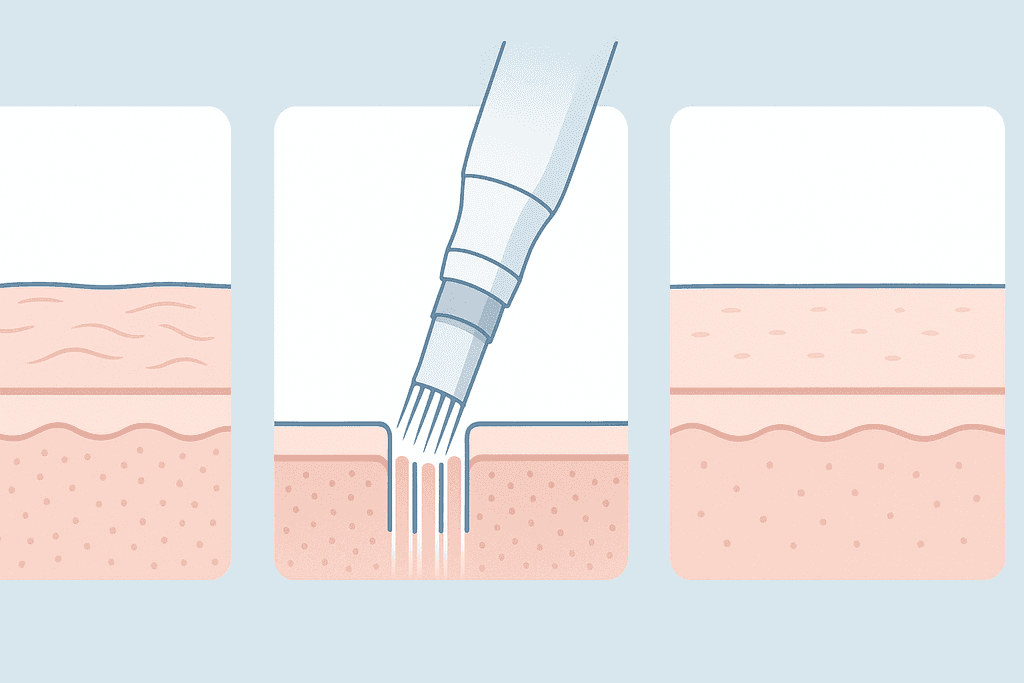
Your skin creates about 30,000 new cells every minute, but sometimes it needs a little push to work harder. Traditional microneedling has been around for years as a way to wake up your skin's natural healing process. The technique uses a motorized pen that looks a bit like a tattoo gun, but instead of ink, it's creating tiny controlled injuries that tell your body to start making fresh collagen. The device stamps vertically into your skin with multiple fine needles, and the depth can be adjusted anywhere from 0.5mm to 2.5mm depending on what you're trying to fix.
What Makes Microneedling Different
The whole process is pretty straightforward, though it might sound a bit intense at first. Your provider will apply numbing cream about 30 minutes before starting, so you won't feel much during the actual treatment.
- Acne scars respond well because the needles break up old scar tissue
- Enlarged pores shrink as new collagen tightens the skin
- Fine lines soften when fresh collagen fills them in from underneath
- Uneven texture smooths out as the skin resurfaces itself
Most sessions take between 30 and 45 minutes, and you'll walk out looking pretty red. That redness sticks around for about 2-3 days, and some people get light peeling as their skin sheds the old damaged layer. It's not exactly a lunchtime procedure, but the results can be worth the downtime.
| Needle Depth | Treatment Area | Best For |
|---|---|---|
| 0.5mm - 1.0mm | Face, neck | Fine lines, product absorption |
| 1.0mm - 1.5mm | Face, décolletage | Wrinkles, mild scarring, texture |
| 1.5mm - 2.5mm | Body, deep scars | Deep acne scars, stretch marks |
How Micro-Channeling Takes a Gentler Approach
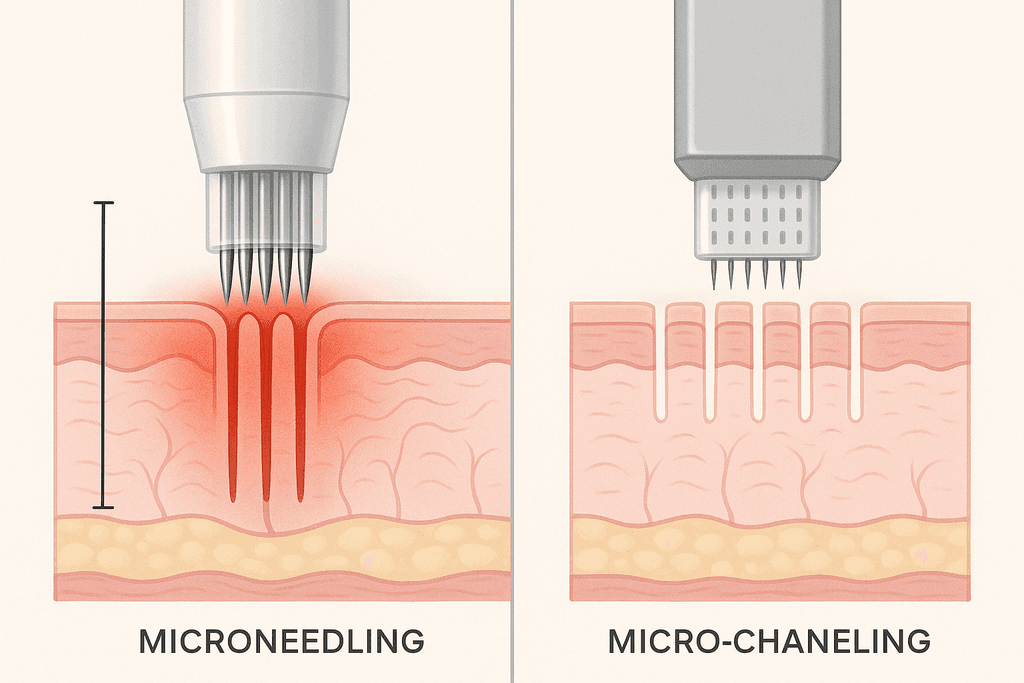
Micro-channeling works on a similar principle but takes things down a notch in terms of intensity. Instead of the deeper vertical stamping motion, this technique uses ultra-fine needles that create precise, shallow channels in your skin. Think of it like the difference between digging holes with a shovel versus using a precision tool. The shallower penetration means less trauma to your skin, which translates to faster healing and less visible redness afterward.
How Micro-Channeling Takes a Gentler Approach
What makes micro-channeling really interesting is that those tiny channels stay open long enough to deliver serums directly where they need to go. At Caleyo Wellness, we use AQUAGOLD, a device with 24-karat gold-plated needles that can infuse customized solutions right into those micro-channels during treatment. The gold plating isn't just fancy, it actually helps the needles glide more smoothly and reduces any chance of irritation.
The recovery time is noticeably shorter than traditional microneedling. Most people are back to normal within 24-48 hours, with way less redness.
- Sensitive skin types handle this treatment much better
- Minimal downtime means you can do it before events
- Direct serum delivery gets active ingredients deeper than topical application
- Less discomfort during and after the procedure
The gentler approach doesn't mean weaker results, it just means your skin doesn't have to work as hard to recover. You're still triggering that collagen response, just without the extended healing period.
Which Treatment Fits Your Skin Goals
Choosing between microneedling and micro-channeling really comes down to what you're trying to fix and how much downtime you can handle. If you're dealing with deep acne scars or significant texture issues, traditional microneedling is probably your better bet. Those deeper needle depths can reach the layers where serious scarring lives, breaking up that tough tissue and forcing your skin to rebuild from scratch. But if you're more focused on fine lines, hydration, or just keeping your skin looking fresh, micro-channeling might be the smarter choice.
Which Treatment Fits Your Skin Goals
Your skin's sensitivity matters too. Some people's skin just doesn't bounce back quickly from aggressive treatments, and that's totally normal.
| Factor | Microneedling | Micro-Channeling |
|---|---|---|
| Best for | Deep scars, major texture issues | Fine lines, hydration, prevention |
| Downtime | 2-3 days visible redness | 24-48 hours minimal redness |
| Skin sensitivity | Moderate to high tolerance needed | Works for sensitive skin |
| Treatment depth | 0.5mm - 2.5mm | Shallow, precise channels |
Here's something most people don't realize: you might not have to choose just one. Some patients do better with a combination approach, using deeper microneedling for problem areas and micro-channeling for maintenance and prevention. A professional assessment can figure out the optimal treatment depth and how often you should come in.
Both treatments require multiple sessions to see the best results. Your skin doesn't rebuild itself overnight, and collagen production takes time. Most people need anywhere from three to six sessions spaced about four to six weeks apart. During a skincare consultation at Caleyo Wellness, we can map out exactly what your skin needs and create a plan that fits your goals and schedule.
Real Results and What to Expect
The biggest question most people have about microneedling vs micro-channeling isn't which one sounds better on paper—it's which one actually delivers visible changes they can see in the mirror. Both treatments work by triggering your skin's natural healing response, but the timeline for seeing those results follows a pretty predictable pattern that's worth understanding before you book your first session. Most patients start noticing real improvements around the 4-6 week mark after their initial treatment, though your skin is actually working hard behind the scenes much earlier than that. The catch is that one session rarely gives you the full transformation you're after, which is why treatment protocols typically involve multiple visits spaced strategically apart.
Treatment Protocol Breakdown:
- 3-6 sessions needed for optimal results when comparing skin texture treatments
- Sessions spaced 4-6 weeks apart to allow proper healing
- Collagen remodeling continues for up to 6 months post-treatment
- Maintenance every 6-12 months keeps skin looking fresh
Here's what makes the waiting game easier to handle. Your skin doesn't just improve and stop—it keeps getting better for months after your last appointment as new collagen forms and organizes itself.
Tracking Progress with Precision
One frustrating part of any skin treatment is wondering if it's actually working or if you're just imagining changes. At Caleyo Wellness, the AI-powered skin analysis system takes the guesswork out of the equation by measuring actual improvements in texture, hydration, and other key metrics over time. You get objective data showing exactly how your skin is responding, which helps adjust your treatment plan if needed.
Factors That Influence Your Timeline:
- Starting skin condition and severity of texture concerns
- Age and natural collagen production capacity
- Whether you combine treatments with PRP or skin boosters
- Consistency with post-treatment skincare protocols
- Lifestyle factors like sun exposure and smoking
The difference between microneedling vs micro-channeling often shows up in how quickly you can return for your next session and how comfortable the recovery period feels. Combining either treatment with skin boosters or PRP can speed up visible results and make each session more effective, though it does add to the overall investment.
Realistic Expectations Matter
No treatment erases decades of sun damage or deep scars in one go. What these procedures do exceptionally well is gradually improve your skin's quality in ways that look natural and feel sustainable. The patients who get the best outcomes are usually the ones who commit to the full series and maintain their results with periodic touch-ups rather than expecting instant perfection.
Finding Your Perfect Skin Texture Solution
Both microneedling and micro-channeling work by triggering your skin's natural collagen production, which means they both deliver real improvements in texture over time. The main difference comes down to how deep the treatment goes, how much downtime you can handle, and what specific skin concerns you're trying to fix. Some people need the deeper penetration of traditional microneedling for acne scars, while others prefer the gentler approach of micro-channeling for fine lines and overall glow.
The truth is, there's no universal answer to which treatment is better. Your skin type, lifestyle, and goals all play a role in determining the right choice. Someone with sensitive skin might struggle with traditional microneedling but thrive with micro-channeling, while someone dealing with deep scarring might need the more aggressive approach.
At Caleyo Wellness, we offer both microneedling and AQUAGOLD micro-channeling treatments, which means you're not locked into one option. Our dual board-certified providers can assess your skin and recommend the approach that makes the most sense for your specific situation. Sometimes the answer isn't even choosing one over the other, but combining treatments strategically over time.
If you're still not sure which direction to go, we offer a free 15-minute discovery call where you can discuss your concerns and get personalized guidance. It's a simple way to figure out your next step without any pressure or commitment.
Common Questions About Skin Texture Treatments
When you're deciding between microneedling vs micro-channeling, you probably have some questions about what to expect. Both skin texture treatments comparison options work well, but the details matter when you're planning your treatment. Here are the answers to what most people want to know before booking their first session.
Does microneedling or micro-channeling hurt more?
Micro-channeling typically feels more comfortable because the needles are thinner and the device stamps rather than drags across your skin. Most people describe microneedling as more intense, especially on sensitive areas like around the nose or forehead. Both treatments use numbing cream beforehand, so you'll feel pressure and some prickling but not sharp pain.
Can I combine these treatments with other procedures?
Yes, and that's actually when you see the best results. Many people pair either treatment with PRP or growth factors that get pushed deeper into the skin during the needling process. At Caleyo Wellness, we often combine micro-channeling with our AQUAGOLD treatment or custom serums for enhanced absorption. Just avoid getting neurotoxins or fillers on the same day since your skin needs to heal first.
How long before I can wear makeup after treatment?
You'll need to skip makeup for 24 hours after microneedling and usually just 12 hours after micro-channeling. Your skin will look pink and feel tight, kind of like a mild sunburn. Most people schedule treatments on a Friday so they can hide out over the weekend, though the redness usually calms down enough by the next day that you can cover it with mineral makeup if needed.
Are results permanent or do I need maintenance?
The collagen you build is real and lasting, but your skin keeps aging. Think of it like going to the gym—you get results that stick around, but maintenance sessions help you keep improving. Most people do a series of three to six treatments spaced a month apart, then come back every six to twelve months to maintain their results.
Which treatment works better for acne scars?
Microneedling tends to work better for deeper acne scars because it can reach further into the skin where scar tissue sits. The deeper needle penetration helps break up that tough tissue and triggers more collagen production in the right spots. Micro-channeling works great for shallow scars and overall texture, but if you have ice pick or boxcar scars, traditional microneedling usually gives you more dramatic improvement.
What's the difference in cost between the two?
Micro-channeling typically costs more per session because the technology is newer and the tips are single-use and more expensive. Microneedling usually runs less per treatment, but you might need more sessions to see the same results. When choosing skin rejuvenation techniques, the total investment over time often evens out between the two options, so focus more on which one fits your skin goals and comfort level.