How high-definition 3D body scanning can enhance your fitness plan
You've been hitting the gym for weeks, eating clean, and staying consistent, but the number on your scale barely budges. The frustration is real because traditional scales can't tell the difference between muscle you're building and fat you're losing, leaving you guessing whether your hard work is actually paying off. That's where 3D body scanning for fitness changes everything by showing you exactly what's happening beneath the surface.
Table of Contents
- How 3D Body Scanning Actually Works
- What 3D Scans Reveal That Other Methods Miss
- Using Scan Data to Adjust Your Workout Plan
- The Motivation Factor of Seeing Real Progress
- Who Benefits Most from 3D Body Scanning
- Making Your Fitness Plan Smarter, Not Harder
- Common Questions About 3D Body Scanning
How 3D Body Scanning Actually Works
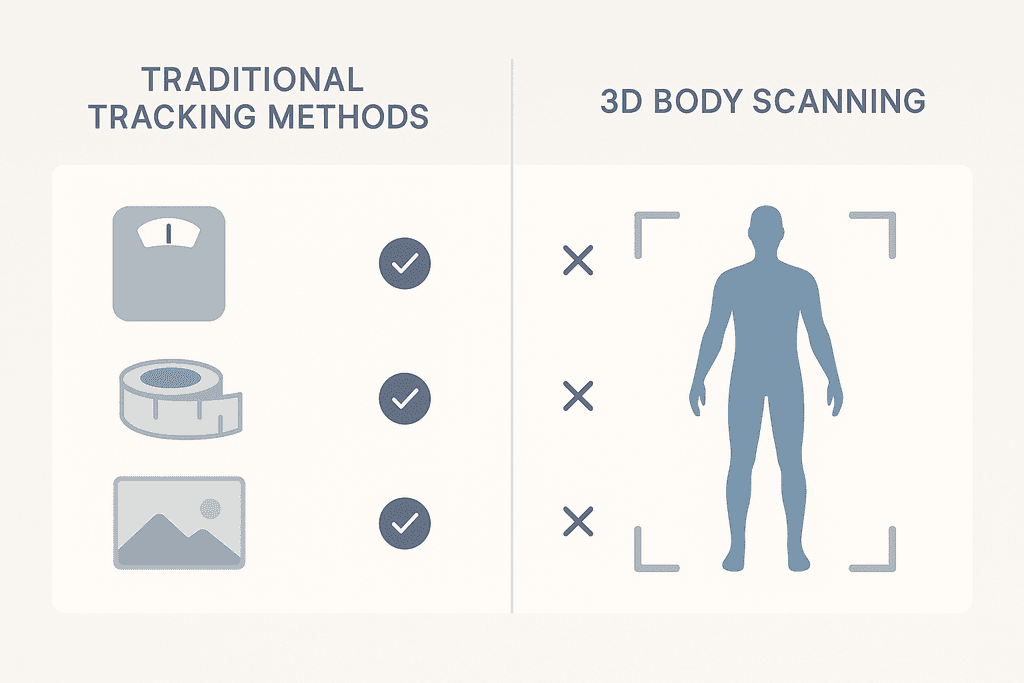
Most people trying to track their fitness progress rely on bathroom scales, measuring tapes, and progress photos. These methods have been around forever, but they miss a lot of what's actually happening to your body. A scale can't tell you if you're losing fat or muscle, and a tape measure depends on you holding it in the exact same spot every time. That's where 3D body scanning for fitness changes everything by giving you actual data instead of guesswork.
The Technology Behind the Scan
A 3D body scanner uses AI-powered cameras positioned around you to capture hundreds of images from different angles in just a few seconds. The system then stitches these images together to create a complete digital model of your body. At Caleyo Wellness, we use ShapeScale technology in our programs to give clients this level of precision tracking.
The scanner measures way more than just your weight or a few body parts. Here's what it captures:
- Exact circumference measurements of every body part down to the millimeter
- Body composition data showing fat percentage and muscle distribution
- Visual heat maps that highlight where you're gaining or losing mass
- Side-by-side comparisons of your body over weeks and months
Traditional Methods Versus Modern Scanning
The difference between old-school tracking and using body scans for workout progress is pretty dramatic. Traditional methods give you rough estimates at best, while 3D scanning provides actual measurements you can trust.
| Method | What It Measures | Accuracy | Time Required |
|---|---|---|---|
| Bathroom Scale | Total body weight only | Can't distinguish fat from muscle | 30 seconds |
| Tape Measure | Single body part at a time | Varies by 1-2 inches depending on placement | 10-15 minutes |
| Progress Photos | Visual appearance only | Depends on lighting, angles, clothing | 5 minutes |
| 3D Body Scanner | Full body composition and measurements | Precise to the millimeter | 60 seconds |
The scanner tracks changes over time with incredible precision. If you lose half an inch around your waist or gain muscle in your shoulders, the system catches it even when you can't see it in the mirror yet. This kind of detailed feedback helps you understand what's actually working in your fitness routine and what needs adjustment.
According to research on how 3D body scanners enhance fitness tracking, this technology removes the human error that comes with manual measurements. You get consistent, reliable data every single time you step into the scanner. That consistency matters when you're trying to make real progress and need to know if your efforts are paying off.
What 3D Scans Reveal That Other Methods Miss
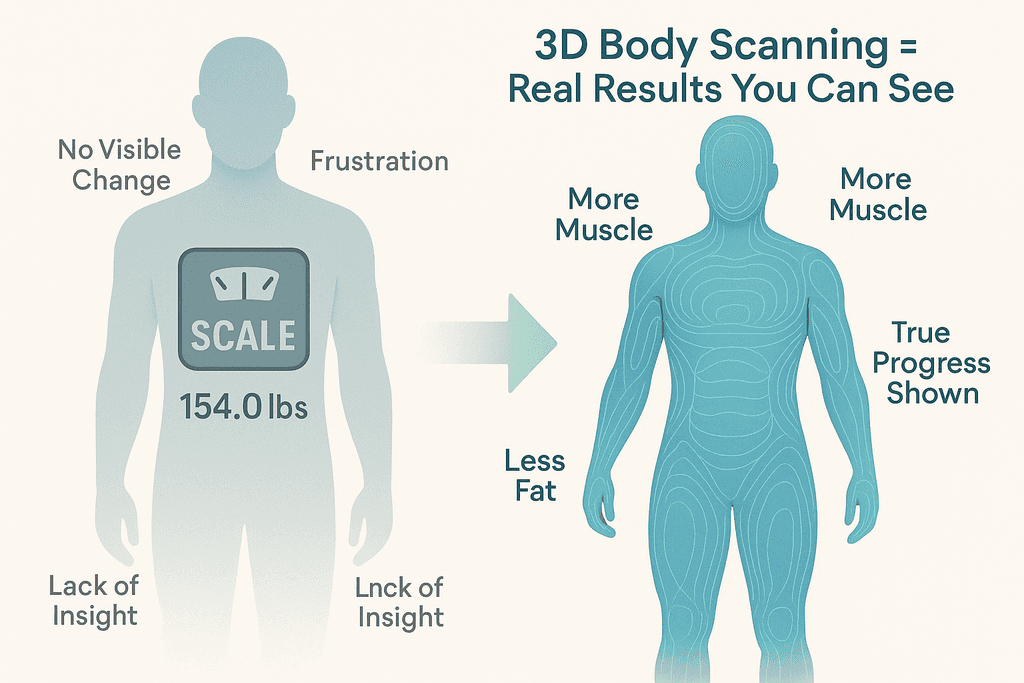
Most people step on a scale and see one number that tells them almost nothing about what's actually happening inside their body. You could be losing fat and gaining muscle at the same time, but that scale would just show the same weight week after week. This is where 3D body scanning for fitness changes everything, giving you a complete picture of your body composition instead of just a single number that doesn't tell the whole story.
What 3D Scans Reveal That Other Methods Miss
The technology captures hundreds of data points across your entire body in seconds. Every measurement is accurate down to the millimeter, tracking changes in your arms, legs, waist, hips, and everywhere else. Traditional methods like tape measures depend on human error and inconsistent placement, but 3D scanners eliminate that guesswork completely.
Here's what a 3D body scan actually measures:
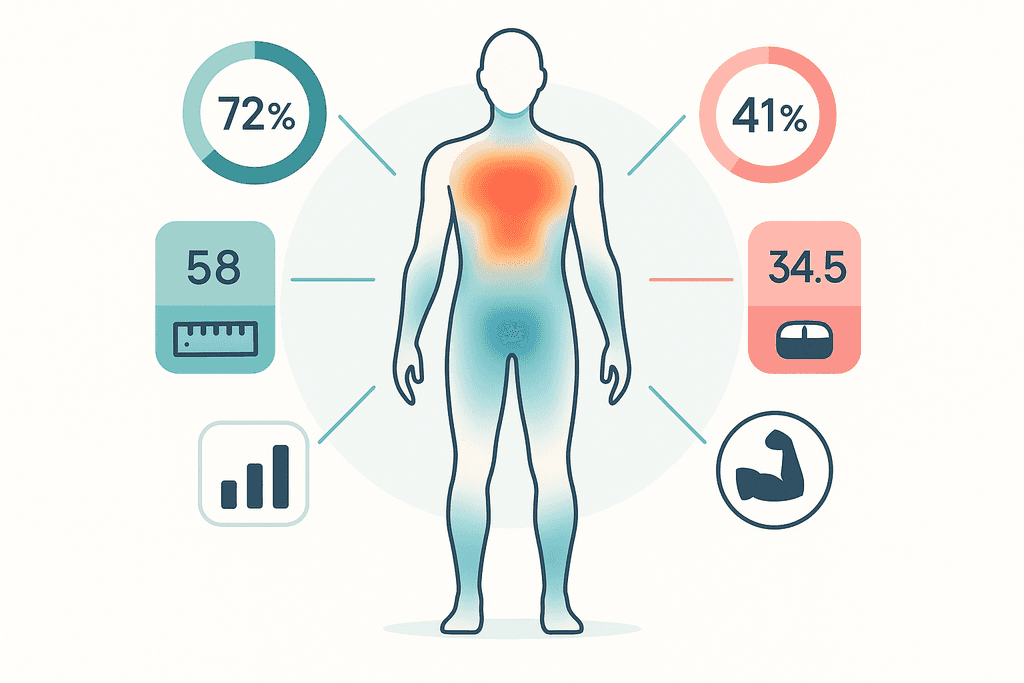
- Body fat percentage and muscle mass distribution across different body regions
- Precise circumference measurements of every body part, tracked over time
- Visual heat maps that show exactly where you're losing fat or building muscle
- Posture and symmetry analysis to identify imbalances
- Side-by-side visual comparisons that make progress impossible to miss
Research shows that 3D body scanning provides highly accurate body measurements that match or exceed traditional assessment methods. The visual component matters just as much as the numbers. When you see a heat map showing fat loss in your midsection or muscle growth in your shoulders, it creates a connection that raw data alone can't provide.
At Caleyo Wellness, we use ShapeScale technology in our ShapeShift & Sustain and LifeSculpting programs to give clients this exact level of detail. The AI-powered scanner creates a complete 3D model of your body, then tracks every change as you progress through your program.
Using Scan Data to Adjust Your Workout Plan
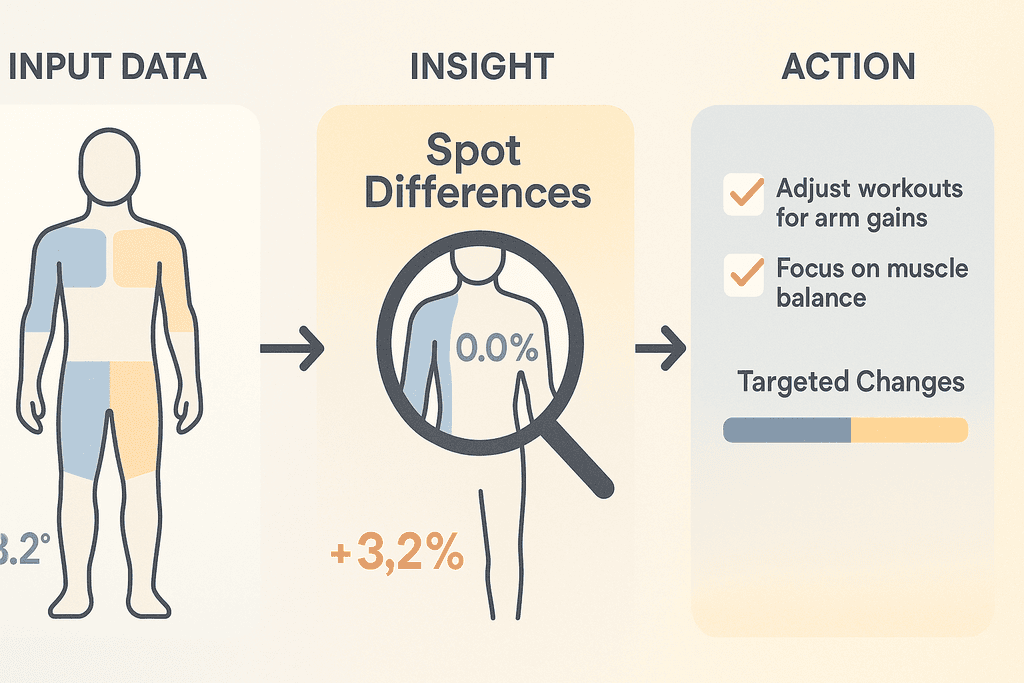
Having all this data means nothing if you don't know what to do with it. The real value comes from using body scans for workout progress and making specific changes based on what the numbers reveal. Maybe your right arm is developing faster than your left, or your lower body is responding better to training than your upper body. These insights let you fix problems before they become obvious.
Using Scan Data to Adjust Your Workout Plan
When you see that your legs are gaining muscle but your arms aren't changing much, that's a clear signal to adjust your training split. The data removes all the guessing from program design. You're not following some generic plan anymore, you're responding to what your actual body is doing.
Action steps for adjusting your plan based on scan data:
- Compare muscle measurements between left and right sides to spot imbalances
- Look at fat loss patterns to see which areas respond best to your current approach
- Track specific muscle groups to verify your strength training is working
- Adjust cardio intensity and timing based on body composition changes, not just weight
- Schedule your next scan to maintain consistent tracking intervals
The timing of your scans matters too. Most people benefit from scanning every 4-6 weeks, which gives your body enough time to show measurable changes without waiting so long that you lose motivation. Our programs at Caleyo Wellness include regular scanning intervals built into the timeline, so you always know when your next checkpoint is coming.
Some clients discover that they're losing fat in their face and arms first, while their midsection takes longer to respond. This is completely normal, but without scan data, they might think nothing is working. The visual proof keeps them consistent during those stubborn phases.
The Motivation Factor of Seeing Real Progress
The psychological side of fitness gets overlooked too often, but it's usually the reason people quit or keep going. When you can't see progress, your brain starts questioning whether the effort is worth it. 3D scanning solves this problem by making invisible changes visible, giving you concrete proof that your work is paying off even when the mirror doesn't show it yet.
Body recomposition is the perfect example. You might lose five pounds of fat and gain four pounds of muscle in a month, which means the scale only drops one pound. Without scan data, that looks like failure. With it, you see exactly what happened and feel motivated to keep pushing.
Non-scale victories that scans reveal:
- Waist circumference dropping while weight stays the same
- Muscle definition improving in specific areas
- Posture corrections from targeted training
- Body fat percentage decreasing even during weight maintenance
The connection between 3D body measurements and health outcomes shows why these metrics matter beyond just appearance. Changes in body composition affect everything from metabolic health to injury risk, making the data valuable for long-term wellness planning.
Setting realistic expectations becomes easier when you have historical data to reference. You can see your actual rate of progress and project forward with accuracy instead of hoping for unrealistic transformations. This keeps people consistent because they know what's achievable and can celebrate hitting those realistic milestones.
The visual timeline feature shows your body changing over months, creating a story of your progress that's impossible to ignore. Some clients at Caleyo Wellness report that seeing their 3D model transform is more motivating than any compliment or clothing size change, because it's objective proof that can't be dismissed or explained away.
Who Benefits Most from 3D Body Scanning
The truth is that most people who struggle with fitness aren't failing because they lack motivation. They're failing because they can't see what's actually happening inside their body. When you step on a scale and see the same number for three weeks straight, it's easy to think nothing is changing. But your body composition might be shifting dramatically under the surface. This is where 3D body scanning for fitness becomes less of a luxury and more of a necessity for anyone serious about results.
Weight Loss Warriors Hitting the Wall
People on weight loss journeys face a predictable pattern. The first few weeks go great, then everything stalls. The scale stops moving, and doubt creeps in. What most don't realize is that plateaus often mask real progress.
- Your body might be losing fat while building muscle at the same time
- Water retention can hide several pounds of actual fat loss
- Traditional scales can't distinguish between losing fat from your midsection versus your legs
- Using body scans for workout progress reveals changes that scales completely miss
At Caleyo Wellness, the 3D Precision Body Tracking system catches these hidden wins. When clients see their visceral fat dropping even as the scale stays put, they stick with their plan instead of giving up.
Athletes and Serious Lifters
Bodybuilders and athletes need precision that bathroom scales can't provide. They're not just trying to lose weight or gain weight. They're sculpting specific muscle groups while minimizing fat gain.
- Track muscle growth in individual body segments like arms, chest, and legs
- Identify muscle imbalances before they cause injury
- Adjust training programs based on actual body composition data
- Monitor whether bulk phases are building muscle or just adding fat
Research on emerging roles of 3D body scanning shows these systems can detect changes as small as a few millimeters in circumference measurements.
The Body Recomposition Crowd
Body recomposition is the holy grail of fitness. Losing fat while gaining muscle simultaneously. It's also the hardest goal to track because the scale often doesn't budge at all. 3D body scanning technology is basically built for this exact scenario.
- See fat melting off your waist while your shoulders get broader
- Watch your body fat percentage drop even when weight stays the same
- Get proof that your program is working when traditional methods show nothing
Busy Professionals Who Need Efficiency
Time-strapped professionals can't afford to waste months on programs that aren't working. They need data-driven feedback fast. A 3D body scan takes about three minutes and provides more information than weeks of manual measurements and progress photos.
The ShapeScale technology used in Caleyo Wellness programs gives these clients exactly what they need. Quick scans, clear data, and adjustments based on what's actually happening. No guesswork, no wasted effort.
Real Scenarios, Real Results
Scenario: The Frustrated Dieter
Challenge: Sarah lost 15 pounds in two months, then the scale stopped moving for four weeks. She was ready to quit her program.
3D Scanning Revealed: While her weight plateaued, she lost 2 inches from her waist and gained muscle in her legs and arms. Her body fat percentage dropped 3% during the "plateau."
Outcome: Sarah stayed consistent and lost another 20 pounds over the next three months because she could see the real changes happening.
Scenario: The Muscle Builder
Challenge: Marcus wanted to bulk up but worried about gaining too much fat. His scale showed he was gaining weight, but he couldn't tell if it was muscle or fat.
3D Scanning Revealed: His chest and shoulder measurements increased significantly while his waist stayed nearly the same. He was building muscle with minimal fat gain.
Outcome: Marcus adjusted his calorie intake based on the data and continued his bulk with confidence, knowing exactly what his body was doing.
Scenario: The Busy Executive
Challenge: Jennifer had 30 minutes a day for fitness and needed to know her workouts were actually working. She didn't have time for trial and error.
3D Scanning Revealed: After just three weeks, scans showed her program was building leg muscle but not targeting her arms effectively.
Outcome: Her trainer adjusted her routine immediately. Instead of wasting months, she saw balanced results across her entire body within two months.
Making Your Fitness Plan Smarter, Not Harder
The truth is, most people quit their fitness plans because they can't see what's actually happening with their body. Using 3D body scanning for fitness takes away all that guesswork and gives you real numbers to work with. You're not just hoping your workout plan is working anymore. You can actually see it.
When you track progress with body scans for workout progress, you get both the visual proof and the data to back it up. That combination keeps you going even when the scale doesn't move or when you hit those frustrating plateaus. The numbers tell a different story than what you see in the mirror on a bad day.
Data-driven adjustments mean your fitness plan evolves with you instead of staying stuck in some generic template. Our 3D Precision Body Tracking at Caleyo Wellness uses AI-powered scanning to measure exactly what's changing in your body composition, so your provider can tweak your plan based on what's actually working. No more wasting time on strategies that don't fit your body's response.
The best part is that this technology isn't just for elite athletes anymore. It's accessible for anyone who wants to stop spinning their wheels and start seeing real progress. If you're curious about how 3D scanning could fit into your wellness plan, we offer a free discovery call to talk through your goals and see if it makes sense for you.
Now let's answer some common questions about how this whole process works.
Common Questions About 3D Body Scanning
If you're thinking about trying 3D body scanning for fitness, you probably have some questions about how it actually works. Most people wonder about everything from what to wear to how often they need to get scanned. Here are the answers to the most common questions we hear about using body scans for workout progress.
How long does a 3D body scan take?
The actual scanning process takes less than a minute. You step onto the platform, stand still while it rotates around you, and you're done. The whole appointment usually takes about 10 to 15 minutes when you include time to review your results with a provider.
How accurate are 3D body scanners compared to DEXA or hydrostatic weighing?
Modern 3D body scanners are incredibly precise for tracking body composition changes over time. While DEXA scans are considered the gold standard for measuring bone density and body fat percentage, 3D body scanning for fitness offers something different. It gives you detailed measurements of specific body areas, visual progress tracking, and body composition data all in one quick scan. At Caleyo Wellness, we use ShapeScale technology in our programs to give clients the most accurate picture of their progress.
How often should you get scanned to track progress?
Most people see the best results when they scan every two to four weeks. Scanning too frequently doesn't give your body enough time to show measurable changes. Waiting too long between scans can make it harder to adjust your program when needed.
Is the scanning process private and comfortable?
Yes, the scan happens in a private room with just you and the scanner. You wear form-fitting clothing like compression shorts and a sports bra or fitted tank top. The data is completely confidential and only shared with your healthcare team.
Can 3D scanning replace other fitness assessments?
It depends on your goals. For tracking body composition changes, muscle growth, and fat loss, 3D scanning gives you more detailed information than a scale or tape measure ever could. However, it doesn't measure things like cardiovascular fitness, flexibility, or strength. Think of it as one powerful tool in your overall fitness assessment toolkit.
What should you wear for a body scan?
Wear tight-fitting, minimal clothing in a solid dark color. Compression shorts and a sports bra work well for women, while men typically wear compression shorts or fitted boxer briefs. Avoid loose clothing, patterns, or anything with metal since these can interfere with the scan accuracy.