How Lifestyle Coaching Can Help You Make Lasting Health Changes

You've probably started a diet or workout plan with the best intentions, only to find yourself back where you started a few weeks later. The problem isn't your willpower—it's that most health changes fail without the right support system in place. Lifestyle coaching for wellness bridges the gap between knowing what you should do and actually sticking with it long enough to see real results.
Table of Contents
- What Makes Lifestyle Coaching Different
- Personalized Plans That Actually Fit Your Life
- Accountability That Keeps You Moving Forward
- Building Habits That Become Second Nature
- Medical Expertise That Addresses Root Causes
- Why Coaching Works When Other Approaches Fail
- Your Next Step Toward Lasting Change
- Common Questions About Lifestyle Coaching
What Makes Lifestyle Coaching Different
Most people have tried to get healthier at some point, whether it's following a diet from a magazine or downloading a fitness app. The problem is that about 80% of people who lose weight gain it back within a year. That's not because people lack willpower or don't care enough. It's because generic plans don't account for your unique body, schedule, preferences, or challenges. Lifestyle coaching for wellness takes a completely different approach by treating you as an individual, not just another person following the same cookie-cutter program.
The Core Principles That Make Coaching Work
Lifestyle coaching isn't about handing you a meal plan and wishing you luck. It's built on three main ideas that actually create lasting change. First, everything is personalized to fit your life, not the other way around. Second, you get regular accountability and support from someone who knows what they're doing. Third, the focus is on changing behaviors and habits, not just hitting a number on the scale.
At Caleyo Wellness, our dual board-certified providers combine medical expertise with nutritional science to create coaching programs that address the real reasons people struggle. When you work with someone who understands both the clinical side and the practical side of health, you get answers that actually work in real life.
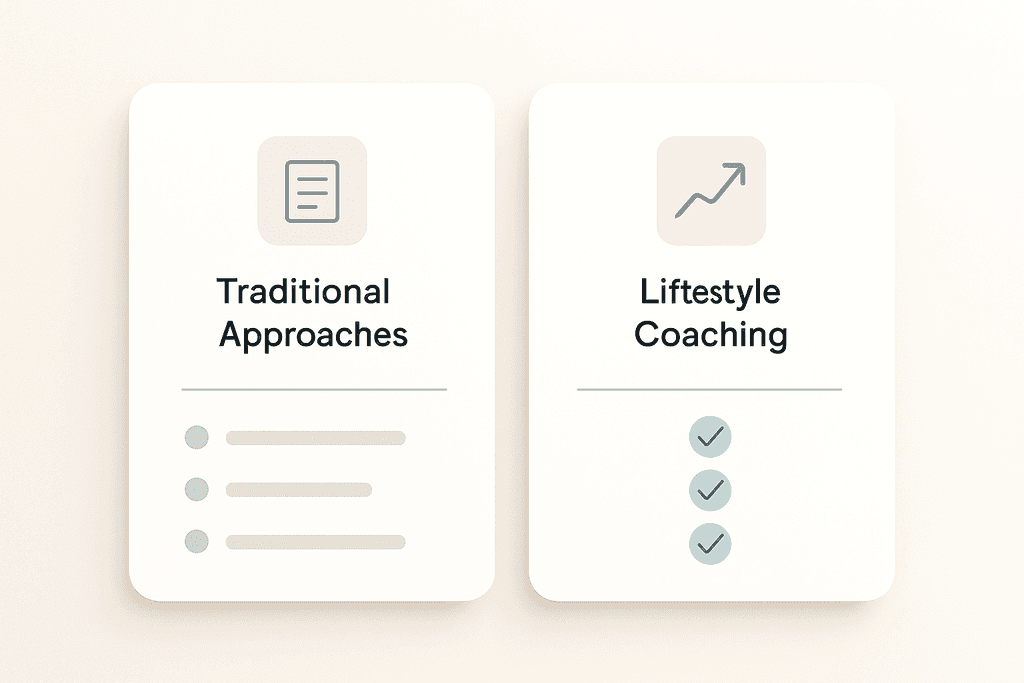
How Coaching Differs From Other Approaches
Understanding the difference between lifestyle coaching and other wellness methods helps explain why how coaching supports health goals is so much more effective. Here's what sets coaching apart from what you might have tried before.
| Traditional Approaches | Lifestyle Coaching Approach |
|---|---|
| One-size-fits-all meal plans | Customized nutrition based on your metabolism, preferences, and lifestyle |
| Generic exercise routines | Movement plans that fit your schedule and physical abilities |
| Quick fixes and short-term results | Sustainable habits built over time with ongoing support |
| Focus only on weight loss | Addresses overall health, energy, sleep, stress, and body composition |
| You're on your own after initial consultation | Regular check-ins, adjustments, and accountability throughout your journey |
The Science Behind Sustainable Change
Research shows that sustainable health habits coaching works because it addresses behavior at multiple levels. Studies on lifestyle coaching interventions have found that people who receive personalized coaching maintain their health improvements much longer than those who go it alone.
The reason comes down to how our brains form habits. When you have someone helping you identify obstacles, celebrate small wins, and adjust your plan when life gets messy, you're more likely to stick with changes. Your coach becomes a partner who helps you problem-solve instead of giving up when things don't go perfectly.
Here's what makes the coaching relationship so powerful for creating change:
- You get expert guidance tailored to your specific health markers and goals
- Regular accountability keeps you consistent even when motivation dips
- Someone helps you navigate setbacks without derailing your entire progress
- You learn skills and strategies you can use for the rest of your life
Personalized Plans That Actually Fit Your Life
Most health programs fail because they treat everyone the same. You get handed a meal plan that worked for someone else, a workout routine that doesn't match your schedule, and advice that ignores your actual life. The problem isn't you—it's the approach. Personalized assessment changes everything by starting with where you actually are, not where some generic program thinks you should be. This means looking at your medical history, your daily routine, what foods you actually enjoy, and what's realistically possible given your work schedule and family commitments.

Personalized Plans That Actually Fit Your Life
At Caleyo Wellness, this personalization goes beyond just asking a few questions. The team uses advanced diagnostics like AI-powered skin analysis and 3D body scanning technology to get precise baseline measurements. These aren't just numbers on a scale—they're detailed insights into body composition, metabolic function, and how your body actually responds to different interventions.
What makes a plan truly personalized:
- Nutrition strategies built around foods you'll actually eat, not restrictive diets you'll abandon in two weeks
- Exercise recommendations that fit your current fitness level and available time
- Lifestyle modifications that work with your schedule, not against it
- Medical considerations that address underlying health conditions or medications
- Regular adjustments as your life circumstances change
The registered dietitian expertise at Caleyo means your nutrition plan isn't just healthy—it's something you can maintain long-term. Because what's the point of a perfect plan you can't stick to? Research shows that personalized coaching approaches lead to significantly better outcomes than generic programs, precisely because they adapt to individual needs rather than forcing everyone into the same mold.
Accountability That Keeps You Moving Forward
Here's something most people don't talk about: knowing what to do isn't the hard part. Actually doing it consistently is where everything falls apart. You start strong, life gets busy, you miss a few days, and suddenly you're back where you started. Accountability isn't about someone checking up on you like a disappointed parent—it's about having a structure that keeps you connected to your goals even when motivation fades. Because motivation always fades. That's normal.
Regular coaching sessions create checkpoints that matter. You're not just floating through the weeks hoping things work out. You have scheduled times to review what's working, what isn't, and why. This structured support makes it much harder to quietly give up without anyone noticing—including yourself.
Key accountability elements that support lasting change:
- Scheduled check-ins that create natural progress milestones
- Objective tracking through tools like 3D body scanning that show changes you might not see in the mirror
- Expert guidance to interpret setbacks without spiraling into "I've ruined everything" thinking
- Flexible communication options for support between formal sessions
- Data-driven adjustments based on actual results, not guesswork
The psychology behind this is straightforward. When you know someone will ask about your progress, you're more likely to follow through. But the best coaches—like the dual board-certified providers at Caleyo—understand the difference between supportive accountability and judgment. They help you navigate obstacles without making you feel like a failure when life happens.
Progress tracking through technology like the 3D body scanner provides concrete evidence of changes happening beneath the surface. Sometimes the scale doesn't move, but your body composition is shifting in meaningful ways. Having that objective data prevents the discouragement that derails so many people.
Building Habits That Become Second Nature
Willpower is overrated. Actually, it's worse than overrated—it's unreliable. Habit formation science tells us that relying on willpower alone is like trying to drive cross-country on a single tank of gas. It runs out. The people who succeed long-term aren't the ones with superhuman discipline. They're the ones who've built systems and habits that don't require constant decision-making and mental effort.

Building Habits That Become Second Nature
Lifestyle coaching for wellness focuses on creating these automatic behaviors. Your coach helps you identify the environmental triggers that lead to unwanted behaviors—like always snacking when you're stressed or skipping workouts when your gym bag isn't packed the night before. Then you work together to modify those triggers or create new, better responses to them.
The habit-building process looks like this:
- Start with one or two small changes, not a complete life overhaul
- Stack new habits onto existing routines (like drinking water right after your morning coffee)
- Set micro-goals that feel achievable rather than overwhelming
- Gradually increase difficulty as behaviors become automatic
- Address obstacles before they derail progress
Common obstacles like stress eating, inconsistent sleep, or exercise avoidance aren't character flaws. They're patterns with underlying causes. A good coach helps you understand what's really driving these behaviors. Sometimes it's practical—you need better meal prep strategies. Sometimes it's deeper—your sleep issues are affecting hunger hormones, making willpower nearly impossible.
The functional medicine approach at Caleyo digs into these root causes. Hormonal imbalances, metabolic issues, and nutritional deficiencies can all sabotage your best efforts. When these are addressed medically, the behavioral changes become so much easier. The nutrition counseling creates sustainable eating patterns rather than restrictive diets that feel like punishment. Because habits you hate won't last, no matter how disciplined you are.
Medical Expertise That Addresses Root Causes
There's a frustrating experience many people have: they're doing everything "right" but not seeing results. They're eating well, exercising regularly, sleeping enough—and nothing changes. This is where dual board-certified providers make a massive difference. They bring actual medical insight to lifestyle coaching, which means they can identify the underlying issues that generic wellness advice misses completely. Sometimes the problem isn't your effort—it's your thyroid, your cortisol levels, or a metabolic adaptation that's working against you.
The functional medicine approach looks at your body as an interconnected system, not a collection of separate symptoms. This means investigating hormonal imbalances, metabolic function, gut health, and nutritional status to find what's actually blocking your progress. Studies show that coaching backed by medical expertise produces longer-lasting results than wellness coaching alone, precisely because it addresses these deeper factors.
Medical oversight enables interventions that pure lifestyle coaching can't offer:
- Metabolic boosters when your metabolism has adapted to previous dieting
- NAD+ IV therapy to support cellular energy and mental clarity
- Personalized supplementation protocols based on actual deficiencies, not guesswork
- Safe medication options when appropriate for weight management or metabolic health
- Hormone optimization when imbalances are sabotaging progress
This comprehensive approach prevents the cycle of trying harder and harder while getting nowhere. When Emmanuel Pelayo, NP-C, RDN, and Jaime Calderon, PA-C work with clients at Caleyo Wellness, they're combining nutritional expertise with medical training. That means they can order labs, interpret results, and make clinical interventions that a regular wellness coach simply can't. The result is coaching that's not just supportive—it's medically effective.
How coaching supports health goals becomes clear when you see this integration in action. It's not just about motivation and meal plans. It's about understanding your body at a clinical level and using that knowledge to create strategies that actually work for your specific physiology. That's what creates lasting change instead of temporary results that fade as soon as the program ends.
Why Coaching Works When Other Approaches Fail
Most people who try to change their health habits on their own fail within the first three months. The problem isn't lack of information or even motivation at the start. It's that self-directed health changes collapse at predictable points that coaching specifically addresses. When you're going it alone, there's no one to catch you when life gets busy, no expert to adjust your plan when progress stalls, and no accountability when that voice in your head says "just this once." Lifestyle coaching for wellness works because it removes these failure points before they derail your progress.
Where DIY Approaches Break Down
Generic programs and willpower-based methods share common weak spots. They assume everyone responds the same way to the same interventions, which is why what worked for your friend might do nothing for you.
- No adjustment when your body adapts or hits a plateau
- Zero support during high-stress periods when old habits resurface
- Missing the medical factors that might be blocking your progress
- No way to know if you're actually doing things correctly
- Easy to quit because there's no external commitment
The Compounding Effect of Professional Guidance
How coaching supports health goals comes down to three elements working together. Personalization means your plan fits your body, schedule, and preferences. Accountability creates consistent action even when motivation dips. Expert guidance catches problems early and adjusts strategies based on real data.
Research shows that virtual health coaching programs significantly improve health outcomes compared to self-directed efforts. The combination matters more than any single factor. At Caleyo Wellness, this integrated approach combines medical oversight, nutritional expertise, and lifestyle coaching under one roof, which means your plan accounts for how everything connects.
Why Investment Increases Success
Here's something counterintuitive about sustainable health habits coaching. Paying for coaching actually improves your results, not just because of what you receive but because of what you commit. When you invest money and time, you're more likely to show up, follow through, and communicate honestly about struggles.
- Financial commitment creates psychological buy-in
- Scheduled appointments prevent the "I'll start Monday" trap
- Professional relationship adds social accountability
- Access to medical-grade tools and testing unavailable to DIY efforts
The Real Cost Comparison
Compare the cost of coaching to the hidden expenses of repeated failed attempts. Each restart means buying new programs, supplements, or gym memberships you won't use. The bigger cost is time lost and the psychological toll of feeling like you can't succeed.
| DIY Health Changes | Coached Approach |
|---|---|
| Trial and error with generic plans | Personalized strategy from day one |
| No adjustment when stuck | Real-time modifications based on progress |
| Easy to quit when unmotivated | Accountability keeps you consistent |
| Miss underlying medical issues | Medical expertise identifies blockers |
| Repeated restart costs add up | One investment in lasting change |
Sustainable change costs less over time because you're not constantly restarting. You're building habits that stick, supported by professionals who understand both the science and the psychology of behavior change.
Your Next Step Toward Lasting Change
The truth is, lasting health changes don't come from following generic advice or relying on willpower alone. They come from three things working together: personalization that fits your actual life, accountability that keeps you moving forward, and expert guidance that knows what actually works. When you have all three, the changes you make tend to stick around instead of fading after a few weeks.
Everyone starts from a different place. Some people need help with nutrition, others with movement patterns, and some just need someone to help them figure out why nothing has worked before. That's exactly why lifestyle coaching for wellness works better than one-size-fits-all programs.
At Caleyo Wellness, our approach combines medical expertise with real-world lifestyle coaching. We use tools like 3D body tracking and personalized nutrition counseling to create sustainable health habits coaching that actually fits into your life. The free discovery call is just a conversation about where you are now and where you want to be, with zero pressure attached.
The hardest part is usually just starting. But once you have the right support system in place, the path forward gets a lot clearer. You might be surprised at what becomes possible when someone who knows how coaching supports health goals is actually in your corner.
Common Questions About Lifestyle Coaching
If you're thinking about working with a lifestyle coach, you probably have some questions about how it all works. Most people wonder if it's really different from what they've tried before, or if it's worth the time and money. Here are the answers to the most common questions we hear about lifestyle coaching for wellness and what you can actually expect from the process.
How is lifestyle coaching different from a personal trainer or nutritionist?
A personal trainer focuses on your workouts, and a nutritionist handles your meal plans. Lifestyle coaching looks at everything together—your sleep, stress, daily habits, mindset, and how all these pieces affect your health goals. It's about building a complete system that fits your real life, not just handing you a workout routine or diet sheet.
How long does it take to see results with lifestyle coaching?
Most people notice small changes within the first few weeks, like better energy or improved sleep. Bigger results like weight loss or body composition changes usually show up around the 8 to 12 week mark. The timeline depends on your starting point and goals, but sustainable health habits coaching focuses on changes that stick, not quick fixes that disappear.
What happens in a typical coaching session?
Sessions usually start with checking in on your progress and any challenges you faced since last time. Your coach will review data like weight, measurements, or how you're feeling, then adjust your plan based on what's working and what isn't. At Caleyo Wellness, we use tools like 3D body scanning to track changes you can actually see, which makes the whole process more concrete and motivating.
Do I need to be in perfect health to start coaching?
Not at all. Lifestyle coaching works for people at any starting point, whether you're dealing with chronic health issues or just want to optimize what you're already doing. The whole point is meeting you where you are and building from there.
How does lifestyle coaching work with medical weight management?
When you combine how coaching supports health goals with medical weight management, you get the best of both worlds. The medical side handles things like metabolic boosters and medications, while coaching helps you build the daily habits that make those treatments work better and last longer. It's not one or the other—they work together to give you better results.
What if I've tried everything and nothing has worked before?
That's actually the most common thing we hear. The difference with lifestyle coaching is that it's personalized to your specific barriers and patterns, not a generic program everyone follows. If past attempts failed, it usually means the approach wasn't right for you—not that you failed.