How to Get the Most from an Advanced Skin Analysis Appointment
Your skin is hiding problems you can't see in the mirror—sun damage brewing beneath the surface, dehydration in deeper layers, and early signs of aging that won't show up for months. Most people walk out of their skin analysis appointments with a printout they don't fully understand, missing the chance to catch these issues before they become visible. At Caleyo Wellness, our AI-powered Skin Analysis System measures everything from pigmentation to pore size with precision imaging, but knowing how to prepare for skin analysis and what questions to ask makes the difference between getting data and actually improving your skin.
Table of Contents
- What Advanced Skin Analysis Actually Measures
- How to Prepare for Your Skin Analysis Appointment
- Questions to Ask During Your AI Skin Scan
- Interpreting Your Skin Analysis Results
- Turning Results into Real Skincare Solutions
- Your Skin Analysis Is Just the Beginning
- Common Questions About Skin Analysis Appointments
What Advanced Skin Analysis Actually Measures
Your dermatologist might spend two minutes looking at your face under bright lights, but they're only seeing what's visible on the surface. AI-powered skin analysis systems work differently—they capture thousands of data points in seconds, measuring things the human eye simply can't detect. At Caleyo Wellness, our AI-powered Skin Analysis System goes beyond what you see in the mirror to create a complete picture of your skin's health. This technology uses specialized imaging and algorithms to evaluate your skin at multiple levels, giving you actual numbers instead of guesswork.
The difference between a traditional visual assessment and an AI scan is like comparing a quick glance to a full medical workup. Traditional assessments rely on what a provider can see and feel, which varies based on lighting, experience, and even how tired they are that day. AI systems eliminate that variability by using consistent imaging protocols and mathematical analysis every single time.
The Metrics That Matter
When you sit down for an advanced skin analysis, the system evaluates several specific measurements that tell the real story of your skin's condition. Each metric connects to different aspects of skin health and aging, which is why understanding them helps you make better decisions about treatment.
Here's what gets measured and why it actually matters:
| Skin Metric | What It Indicates | Why It Matters |
|---|---|---|
| Hydration Levels | Water content in skin layers | Affects plumpness, texture, and how products absorb |
| Elasticity | Skin's ability to bounce back | Shows collagen health and predicts sagging |
| Pigmentation | Melanin distribution and dark spots | Reveals sun damage and uneven tone issues |
| Texture | Surface smoothness and roughness | Indicates cell turnover rate and scarring |
| Pore Size | Opening diameter and visibility | Connected to oil production and aging |
| Wrinkle Depth | Fine lines and deeper creases | Measures structural aging and expression patterns |
Why Data Beats Guessing
Most people buy skincare based on what their friend uses or what they see advertised online. That approach wastes money because your skin isn't the same as anyone else's. When you know your actual hydration level is 32% instead of just "dry," you can track whether treatments are working or not. The numbers don't lie, and they don't change based on mood or marketing.
Understanding how to prepare for skin analysis and what questions to ask about AI skin scans makes the whole process more valuable. You're not just getting a fancy photo—you're getting a baseline that lets you measure real progress over time. According to documented case studies, people who use data-driven approaches see better results because they can adjust their routines based on what's actually happening, not what they think is happening.
Interpreting skin analysis results becomes easier when you understand what each number represents. Instead of wondering if that new serum is doing anything, you'll see your hydration score increase or your pigmentation score improve. That's the difference between hoping your skincare works and knowing it does.
How to Prepare for Your Skin Analysis Appointment
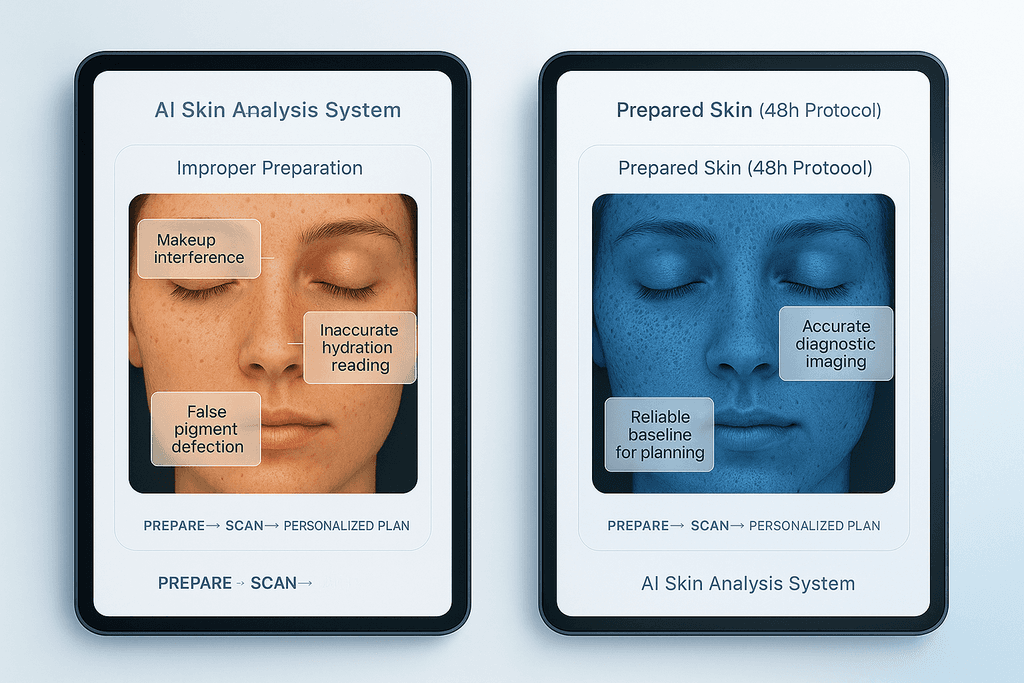
Most people show up to their skin analysis wearing makeup and wonder why their results seem off. The truth is, what you do in the days before your appointment matters just as much as the scan itself. Think of it like getting blood work done—you wouldn't eat a huge meal right before a fasting glucose test, right? Your skin needs the same kind of preparation to give you accurate, useful data that actually helps you make better decisions about your skincare.
How to Prepare for Your Skin Analysis Appointment
The 48-hour window before your appointment is when you need to start adjusting your routine. Stop using any retinoids, exfoliating acids, or prescription treatments at least two days before. These products can temporarily change how your skin looks and throw off the readings.
- 72 hours before: Stop retinoids and prescription treatments
- 48 hours before: Skip exfoliating acids and peels
- 24 hours before: Avoid heavy masks or new products
- Day of appointment: Come with completely clean, bare skin—no makeup, moisturizer, or sunscreen
On the morning of your scan, wash your face with a gentle cleanser and leave it alone. No serums, no SPF, nothing. The AI technology at Caleyo Wellness needs to see your actual skin, not a layer of products sitting on top of it. If you're worried about sun exposure on your way to the appointment, wear a hat instead of sunscreen.
Bring your current skincare products with you in a bag. Your provider will want to see what you're using and how it might be helping or hurting your skin goals. Also bring a list of your main concerns—whether that's dark spots, fine lines, or texture issues. If you have photos of your skin at different times (like when it's breaking out or looking particularly good), those help too.
Write down questions before you arrive. When you're sitting in the appointment, it's easy to forget what you wanted to ask. Having a list keeps you focused and makes sure you get the most value from your consultation time.
Questions to Ask During Your AI Skin Scan
The scan itself only takes a few minutes, but the conversation afterward is where the real value lives. Most people nod along during their consultation and then realize later they didn't actually understand what their results meant. The providers at Caleyo Wellness expect questions—that's literally what they're there for. But knowing what to ask makes the difference between walking out confused and walking out with a clear plan.
Questions to Ask During Your AI Skin Scan
Start with your specific problem areas. Point to the spots on your face that bother you most and ask what the scan shows about those exact locations. Sometimes what you think is a texture issue is actually pigmentation, or what looks like dryness is really a barrier problem.
- What does the scan reveal about my main concern areas?
- Am I dealing with surface symptoms or deeper underlying issues?
- What's my skin age compared to my actual age?
- Which problems should I tackle first, and why?
- How often should I come back for progress scans?
One question that catches people off guard is the skin age versus chronological age comparison. The AI can estimate how old your skin appears based on elasticity, pigmentation, and other factors. If there's a gap between the two numbers, that tells you something important about how your current routine is working.
Ask about treatment sequencing too. You might want to address five different concerns, but some treatments work better when done in a specific order. Understanding the "why" behind the recommended timeline helps you stay patient and committed to the process. You can learn more about what happens during these appointments to prepare yourself better.
Interpreting Your Skin Analysis Results
Your scan results come back as a report full of numbers, percentiles, and color-coded maps. It looks impressive, but what does it actually mean? The key is understanding that these aren't grades—they're measurements. A low score in one area doesn't mean you failed; it means you have room for improvement in that specific category. The data shows you exactly where your skin needs help and where it's already doing well.
Percentile scores compare your skin to other people in your age group. If your hydration score is in the 30th percentile, that means 70% of people your age have better hydration levels. It's not about being perfect—it's about knowing where you stand so you can make targeted changes.
| Metric | What It Measures | What Low Scores Mean |
|---|---|---|
| Hydration | Water content in skin layers | Dryness, dullness, fine lines |
| Elasticity | Skin's ability to bounce back | Sagging, loss of firmness |
| Pigmentation | Even distribution of melanin | Dark spots, sun damage |
| Texture | Surface smoothness | Roughness, acne scars |
| Pore Size | Visible pore diameter | Enlarged pores, congestion |
The pigmentation maps are particularly revealing. They show sun damage that you can't even see yet with your naked eye. Those brown and red spots on the map represent melanin deposits sitting under your skin's surface, waiting to appear as you age. This is why people who think they have "good skin" are sometimes shocked by their scan results.
Look at your top three lowest-scoring categories. Those are your priority areas. Trying to fix everything at once usually means you fix nothing. The providers at Caleyo Wellness use your scan data to create a focused plan that addresses your biggest concerns first, then builds from there.
Turning Results into Real Skincare Solutions
Data without action is just interesting information. The whole point of getting an AI skin scan is to use those results to actually improve your skin. This is where the science meets the real world—your specific numbers guide which treatments will work best for you. Someone with low elasticity scores needs different solutions than someone dealing with pigmentation issues, even if they're the same age.
Your scan results directly inform which treatments make sense for your skin. Low hydration scores might point toward skin boosters or medical-grade moisturizers. Poor texture readings could mean you're a good candidate for microneedling or chemical peels. At Caleyo Wellness, the providers match your data to specific procedures rather than guessing based on how your skin looks.
- Pigmentation issues: Chemical peels, targeted serums
- Elasticity concerns: Microneedling, collagen-stimulating treatments
- Texture problems: Resurfacing treatments, medical-grade exfoliants
- Hydration deficits: Skin boosters, barrier repair protocols
If your elasticity scores are particularly low, that's when more advanced options like AutoCorre® might come into the conversation. This regenerative treatment specifically targets collagen and elastin production, which is exactly what those low scores are measuring. The beauty of having actual data is that you're not just trying random treatments and hoping they work.
Building your at-home regimen follows the same logic. The scan shows which ingredients your skin actually needs. Someone with high pigmentation readings needs vitamin C and niacinamide. Someone with barrier issues needs ceramides and gentle hydrators. Your provider can recommend medical-grade products that target your specific deficiencies rather than generic drugstore options that might not address your real problems.
Set realistic timelines based on what you're treating. Surface-level concerns like hydration can improve in weeks. Deeper issues like elasticity and pigmentation take months. The advantage of having baseline scan data is that you can come back for follow-up scans and see actual proof that your treatments are working. Numbers don't lie—either your scores are improving or they're not. Research shows that objective skin measurements lead to better treatment outcomes than visual assessment alone.
The goal isn't perfection. It's progress. Your scan gives you a starting point and a way to measure whether what you're doing is actually working. That's worth more than any expensive cream you buy based on an Instagram ad.
Your Skin Analysis Is Just the Beginning
Getting an advanced skin analysis is only half the battle. The real work starts when you take those results and turn them into a plan that actually works for your skin. That means showing up prepared, asking the right questions during your consultation, and making sure you understand what all those numbers and images mean before you leave.
The truth is, guessing what your skin needs rarely works out well. Data-driven skincare gives you something to work with instead of just hoping that expensive cream will fix everything. When you know exactly what's happening under the surface, you can stop wasting money on products that don't match your actual skin concerns.
At Caleyo Wellness, our AI-powered Skin Analysis System captures detailed diagnostic imaging that measures everything from hydration levels to pigmentation patterns. But the technology is just one piece. What matters most is having someone who can interpret those results and explain what they mean for your specific goals.
The best part about how to prepare for skin analysis is that it sets you up for better conversations with your provider. You'll know what questions to ask about interpreting skin analysis results, and you'll leave with a clear plan instead of more confusion.
If you're curious about what a personalized skin analysis could show you, we offer a free 15-minute discovery call. It's a simple way to discuss your concerns and figure out if this approach makes sense for where your skin is right now.
Common Questions About Skin Analysis Appointments
If you're thinking about booking your first advanced skin analysis, you probably have some questions about what actually happens during the appointment. Most people wonder about everything from timing to prep work, and honestly, those concerns make total sense when you're trying something new. Here's what you need to know before you schedule your visit to make the whole experience smooth and stress-free. These answers cover the practical stuff that comes up most often when people are getting ready for their first scan.
How long does a skin analysis appointment take?
The actual scan itself only takes a few minutes, but plan for about 30 to 45 minutes total for your appointment. This gives your provider time to review your results, explain what the data means, and talk through personalized treatment options based on what the AI imaging reveals about your skin.
Is the scan safe for all skin types and tones?
Yes, the AI-powered skin analysis system works safely on all skin types and tones. The technology uses advanced imaging that doesn't involve any invasive procedures or harmful radiation, just sophisticated cameras that capture detailed information about your skin's condition.
Can you wear makeup to the appointment?
It's best to come with a clean, bare face so the scan can get the most accurate reading of your skin. If you need to wear makeup during the day, that's fine, but you'll be asked to remove it before the analysis. Knowing how to prepare for skin analysis means skipping heavy skincare products that morning too, since they can interfere with the readings.
What's the difference between AI skin analysis and a regular facial consultation?
A regular consultation relies mostly on what your provider can see with their eyes and what you tell them about your concerns. AI skin analysis goes deeper by measuring things you can't see on the surface, like hydration levels beneath your skin, early pigmentation forming, and precise pore measurements. At Caleyo Wellness, this technology helps create treatment plans based on actual data rather than guesswork, which means interpreting skin analysis results becomes much more precise and personalized.
How often should you get a skin analysis done?
Most people benefit from getting scanned every three to six months to track progress and adjust their skincare routine as their skin changes. If you're actively treating a specific concern or following a treatment protocol, your provider might recommend more frequent scans to monitor how well things are working.
How much does an advanced skin analysis cost at Caleyo Wellness?
Pricing varies depending on whether you're combining the analysis with other services or treatments. The best way to get accurate information about costs is to book a free 15-minute discovery call, where you can discuss your specific goals and get a personalized quote. Common questions for AI skin scans about pricing get answered during that initial conversation, and payment plans are available to make advanced skincare more accessible.