Recognizing When You Should Consider a Specialized Hair Restoration Program
You glance at your hairline in the mirror and notice it's not quite where it used to be, or maybe your part seems wider than you remember. Over 80 million Americans experience hair loss, and most wait years before seeking professional help—often missing the window when early intervention works best. Recognizing when to seek hair restoration can make all the difference between preserving what you have and playing catch-up later.
Table of Contents
- Understanding Hair Loss Patterns
- Physical Signs That Point to Hair Loss
- Emotional and Lifestyle Impact
- What Modern Hair Restoration Programs Offer
- Choosing the Right Time to Start
- Why Specialized Programs Outperform DIY Solutions
- Taking the First Step Toward Hair Restoration
- Common Questions About Hair Restoration
Understanding Hair Loss Patterns
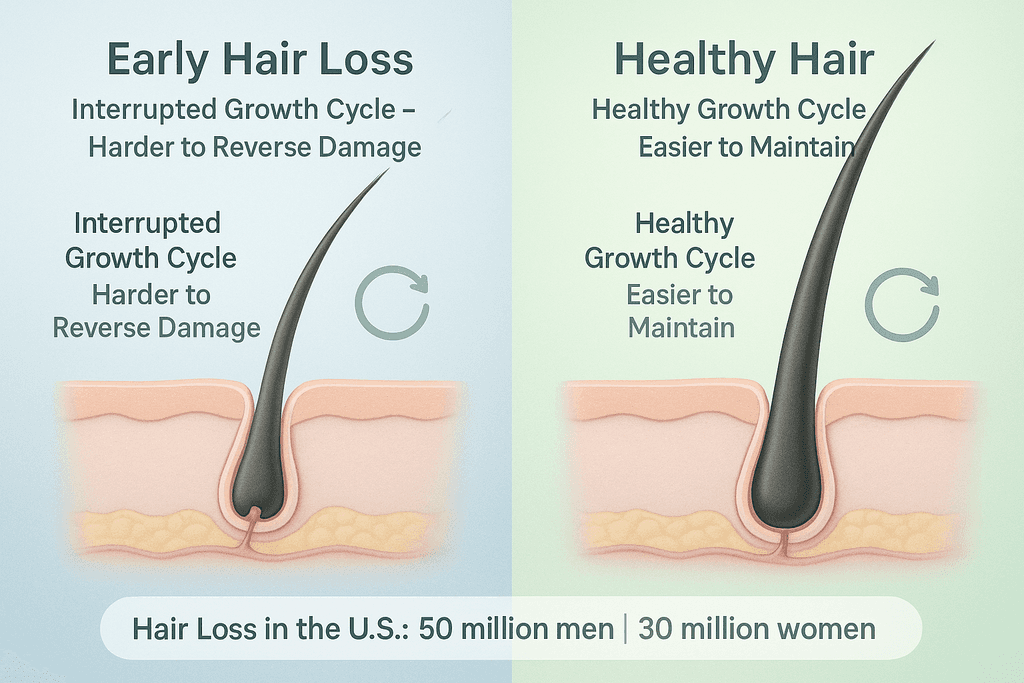
About 50 million men and 30 million women in America deal with some form of hair loss, and most of them wait way too long before seeking hair restoration help. The thing is, your hair goes through natural growth cycles that last anywhere from two to six years, and once those cycles get disrupted, the damage can be harder to reverse. Think of it like catching a small leak in your roof versus waiting until water's pouring through your ceiling. The earlier you notice the signs for considering hair treatment, the more options you'll have and the better your results can be.
What Causes Hair to Fall Out
Hair loss isn't just one thing with one cause. Your genes might have programmed your hair follicles to shrink over time, or your hormones could be throwing things off balance. Sometimes it's about what's happening in your daily life.
- Androgenetic alopecia (pattern baldness) comes from your DNA and affects about 80% of men and 50% of women by age 70
- Hormonal changes during pregnancy, menopause, or thyroid issues can trigger sudden shedding
- Stress, poor nutrition, and certain medications can push hair follicles into early retirement
- Autoimmune conditions like alopecia areata make your immune system attack your own hair follicles
At Caleyo Wellness, our hair restoration treatments start with figuring out exactly what type of hair loss you're dealing with, because different causes need different approaches.
Types of Hair Loss Breakdown
Not all hair loss looks the same or happens for the same reasons. Some people notice a receding hairline, while others see their part getting wider or find bald patches appearing overnight.
| Type of Hair Loss | Main Causes | Typical Age of Onset |
|---|---|---|
| Androgenetic Alopecia | Genetics, DHT hormone sensitivity | Men: 20s-30s, Women: 40s-50s |
| Telogen Effluvium | Stress, illness, nutritional deficiency | Any age, often temporary |
| Alopecia Areata | Autoimmune response | Before age 30 (most cases) |
| Traction Alopecia | Tight hairstyles, physical stress on hair | Any age with styling habits |
Why Timing Matters for Treatment
Here's the part most people don't realize until it's too late. Once a hair follicle stays dormant for too long, it can actually die and stop producing hair forever. That's why when to seek hair restoration matters so much.
- Hair follicles that are thinning but still active respond much better to treatment than dead follicles
- Early intervention can slow down or even stop further hair loss before it becomes severe
- Treatments work best when you still have some hair density to build on
If you're noticing more hair in your brush, a widening part, or thinning at your temples, that's your signal to act. Choosing a hair restoration program with experienced providers means getting a proper diagnosis and a plan that actually matches your specific situation. The sooner you start, the more hair you can keep.
Physical Signs That Point to Hair Loss
Most people lose between 50 and 100 hairs every single day without even noticing. But when that number starts creeping higher, the signs become harder to ignore. You might find yourself cleaning out the shower drain more often than usual, or noticing clumps of hair on your pillow when you wake up. These aren't just random occurrences. Your body is trying to tell you something, and recognizing these early warning signs can make all the difference in how effectively you can address the problem.
Physical Signs That Point to Hair Loss
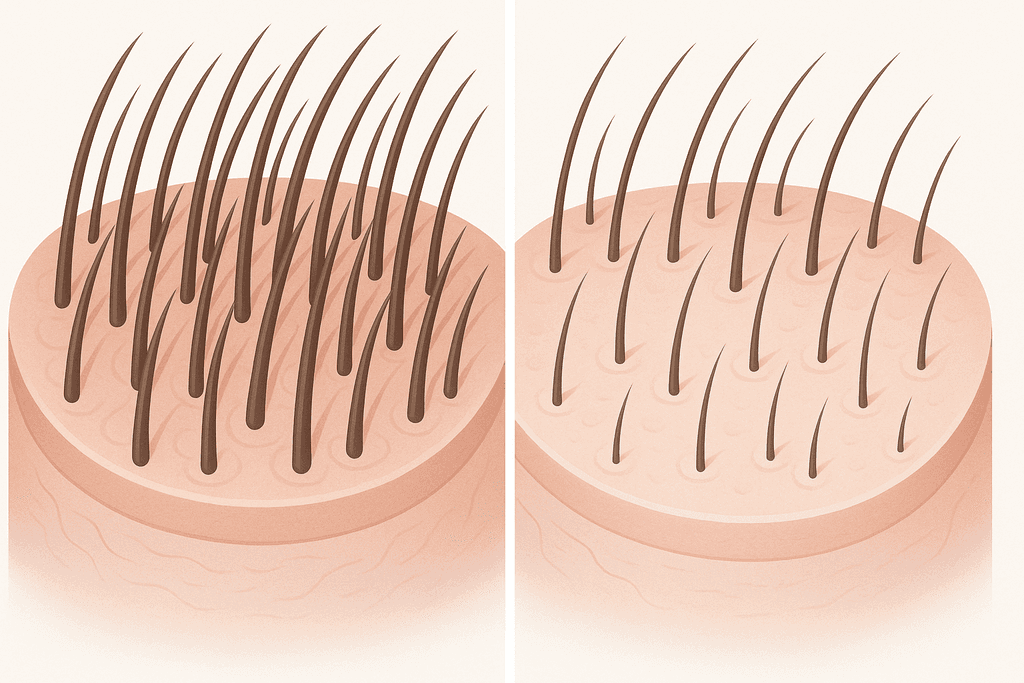
The mirror often reveals what we've been trying not to see. Widening part lines are one of the most common early indicators, especially for women. What used to be a thin line suddenly shows more scalp than hair. For men, a receding hairline or thinning at the crown typically signals the beginning of pattern hair loss.
- More hair in the shower drain or on your pillow than you remember seeing before
- Widening part lines or visible scalp where your hair used to look fuller
- Receding hairline or thinning at the crown that becomes more noticeable over time
- Changes in hair texture or thickness that make styling more difficult
- Noticeable bald patches or uneven growth in specific areas of your scalp
Sometimes the changes are more subtle. Your hair might feel different when you run your fingers through it, thinner or less dense than it used to be. The ponytail that once required two loops of your hair tie now needs three. These texture changes matter just as much as visible thinning because they indicate what's happening at the follicle level.
Emotional and Lifestyle Impact
Hair loss doesn't just change how you look. It changes how you move through the world. You might find yourself declining invitations to events where photos will be taken, or spending an extra twenty minutes each morning trying different angles and products to hide the thinning spots. What used to be a quick routine becomes a daily negotiation with your reflection. The emotional weight of hair loss often exceeds the physical reality, and that's when many people realize it's time to explore professional options.
Emotional and Lifestyle Impact
Research shows that nearly 75% of people experiencing hair loss report a significant impact on their self-esteem. This isn't vanity. It's a legitimate response to a visible change that affects how we present ourselves to others.
The lifestyle adjustments start small but add up quickly. You might avoid swimming because getting your hair wet reveals the thinning. Wind becomes an enemy. Bright overhead lighting in restaurants or offices makes you self-conscious. These aren't just minor inconveniences when they start dictating your choices and limiting your experiences.
- Avoiding social situations or photos due to hair concerns
- Spending excessive time styling to cover thinning areas
- Feeling self-conscious in professional or personal settings
- Impact on self-esteem and confidence levels
- When hair loss starts affecting quality of life
The question isn't whether your concerns are valid. They are. The question is whether you're ready to do something about it. When hair loss begins affecting your daily decisions and emotional wellbeing, that's usually the clearest signal that seeking professional hair restoration treatment makes sense.
What Modern Hair Restoration Programs Offer
The gap between drugstore solutions and medical-grade treatments is wider than most people realize. Over-the-counter products might slow down hair loss for some people, but they rarely address the underlying causes or stimulate meaningful regrowth. Professional programs take a different approach entirely. They start with understanding what's actually happening at your scalp and follicle level, then build a treatment plan around those specific findings. At Caleyo Wellness, our hair restoration approach focuses on both scalp health and follicle stimulation using medical-grade protocols that aren't available in retail products.
Microneedling for hair restoration works by creating controlled micro-injuries that trigger your body's healing response. This process stimulates collagen production and increases blood flow to the follicles, creating a better environment for hair growth. When combined with targeted serums or growth factors, the results can be significantly more effective than topical treatments alone.
| DIY Approaches | Medical Programs |
|---|---|
| Generic formulations | Customized treatment plans based on individual assessment |
| Trial and error approach | Professional diagnosis of underlying causes |
| Limited treatment options | Combination therapies for optimal results |
| No clinical oversight | Regular monitoring and adjustments by board-certified providers |
The most effective programs don't rely on a single treatment. They combine multiple approaches based on what your specific situation requires. This might include microneedling sessions, specialized serums, nutritional support, and lifestyle modifications that work together to create the best possible environment for hair regrowth. Research on hair loss and restorative techniques continues to show that combination therapies typically outperform single-treatment approaches.
Choosing the Right Time to Start
There's a reason why dermatologists and hair restoration specialists emphasize early intervention. Once hair follicles become completely dormant, bringing them back to life becomes exponentially harder. The follicles that are thinning but still producing some hair, even if it's fine and weak, respond much better to treatment than follicles that have been inactive for years. This doesn't mean it's ever too late to explore your options, but it does mean that waiting rarely improves your outcomes.
A proper consultation does more than just look at your hair. Dual board-certified providers assess your overall health, nutritional status, hormone levels, and lifestyle factors that might be contributing to hair loss. They examine your scalp condition, hair density patterns, and the quality of existing hair growth. This comprehensive evaluation helps determine not just if you're a candidate for treatment, but which specific treatments will likely work best for your situation.
- Why earlier intervention typically yields better results
- What happens during a hair restoration consultation
- Questions to ask during your discovery call
- Realistic expectations and treatment timelines
- How dual board-certified providers assess candidacy
The timeline for results varies depending on which treatments you pursue and how your body responds. Most people start seeing initial improvements within three to four months, with continued progress over the following year. This isn't an overnight fix, but choosing a hair restoration program that's backed by medical expertise gives you the best chance of meaningful, lasting results.
If you're spending more time worrying about your hair than enjoying your life, that's probably your answer. The free discovery call exists specifically to help you figure out if professional treatment makes sense for your situation, without any pressure or commitment. Sometimes just understanding what's possible changes everything.
Why Specialized Programs Outperform DIY Solutions
Most people start their hair restoration journey at the drugstore, grabbing whatever shampoo or supplement promises thicker hair. The problem is that hair loss isn't a one-size-fits-all condition, and those generic products treat everyone the same way. What works for someone with hormonal hair loss won't help someone dealing with nutritional deficiencies or scalp inflammation. Without knowing the actual cause of your hair thinning, you're basically guessing and hoping something sticks.
This is where professional diagnosis changes everything. When you work with specialists who understand hair restoration, they don't just hand you a product. They look at your medical history, run tests if needed, and figure out what's actually causing your hair to thin. At Caleyo Wellness, our hair restoration approach starts with understanding your unique situation before recommending any treatment.
The DIY Approach Versus Medical Programs
Here's what you're working with when you go the drugstore route:
- Generic formulations that can't address specific causes like hormonal imbalances or autoimmune conditions
- No way to track actual progress beyond what you see in the mirror
- Trial and error that can waste months or years without real results
- Risk of using products that might actually make certain conditions worse
Medical programs take a completely different approach. They combine multiple treatment methods based on what your scalp and follicles actually need.
- Detailed assessment using advanced diagnostic tools to identify root causes
- Combination therapies that address hair loss from multiple angles simultaneously
- Regular monitoring and adjustments based on how your hair responds
- Access to prescription-strength treatments not available over the counter
- Expert oversight from providers who understand the science behind hair growth
Why Combination Therapy Works Better
The truth is that hair loss usually has multiple contributing factors. Maybe your hormones are off and you're also dealing with inflammation. Or perhaps genetics are at play alongside nutritional gaps. A single product can't fix all of that at once. Medical programs use combination approaches because they understand this complexity. You might get topical treatments for the scalp, nutritional support for follicle health, and targeted injections to stimulate growth all working together.
Research shows that medically supervised hair restoration has significantly higher success rates than DIY attempts, mainly because treatments are personalized and adjusted over time. If you're serious about when to seek hair restoration, the answer becomes clear once you understand these differences. Getting a proper hair restoration consultation helps you understand exactly what's happening with your hair and what will actually work for your specific situation.
Taking the First Step Toward Hair Restoration
Hair loss doesn't happen overnight, and neither does the decision to do something about it. But once you start noticing the warning signs—whether it's a widening part, thinning at the temples, or more hair in your brush than usual—waiting too long can make treatment harder. The good news is that when to seek hair restoration treatment isn't some mystery. If you're seeing changes that bother you, that's usually your answer.
Early intervention matters because your hair follicles respond better when they're still active. Once they've been dormant too long, bringing them back becomes much more difficult.
Getting started doesn't have to feel overwhelming. At Caleyo Wellness, we offer a free 15-minute discovery call where you can talk through what you're noticing and learn about options that might work for your specific situation. Our hair restoration treatments are personalized and science-backed, designed to target both scalp health and follicle function.
The hardest part is usually just picking up the phone or filling out that contact form. But once you do, you'll have a clearer picture of what's happening and what you can actually do about it. Your hair health affects how you feel every day, and that's worth paying attention to.
If you've been wondering whether it's time to seek help, the fact that you're reading this probably means it is. The questions you still have are normal, and that's exactly what the next section is for.
Common Questions About Hair Restoration
Deciding when to seek hair restoration can bring up a lot of questions. Most people want to know what they're getting into before they commit to any treatment. Here are the answers to the most common concerns we hear from people considering hair restoration programs.
How long does it take to see results from hair restoration?
Most people start noticing improvements around the 3 to 4 month mark, though this varies based on the type of treatment and your individual response. Hair growth happens in cycles, so patience is key. Full results typically show up between 6 to 12 months as your follicles respond to treatment and new growth becomes visible.
Is hair restoration painful or require downtime?
The treatments we offer at Caleyo Wellness are minimally invasive and designed with comfort in mind. Most procedures involve little to no downtime, so you can return to your normal routine right away. Any mild discomfort during treatment is brief and well-tolerated by the majority of patients.
What's the difference between hair restoration and hair transplants?
Hair restoration focuses on stimulating your existing follicles and improving scalp health through non-surgical methods like injections, microneedling, and targeted therapies. Hair transplants involve surgically moving hair from one area to another. Our approach targets both the scalp and follicle health to encourage natural regrowth without surgery.
Are payment plans available for hair restoration programs?
Yes, we offer payment plans to make advanced hair restoration services more accessible. During your free discovery call, we can discuss program options and work out a payment structure that fits your budget.
Can hair restoration work for all types of hair loss?
Hair restoration works best for certain types of hair loss, particularly those related to thinning, hormonal changes, or early-stage pattern loss. Conditions like scarring alopecia or complete follicle loss may have limited response. That's why a personalized consultation is important to determine if you're a good candidate and which treatments will give you the best outcome.
What happens during a free discovery call?
The 15-minute discovery call is a no-pressure conversation where you can share your concerns and goals. We'll discuss when to seek hair restoration, review which treatments might work for you, and answer any questions you have about the process. It's a simple way to see if our hair restoration program is the right fit before committing to anything.