Tips for preventing and treating hair thinning without surgery

```html
You run your fingers through your hair in the morning and notice more strands than usual coming away in your hand. Hair loss affects over 80 million Americans, but here's what most people don't realize: the majority of cases respond well to non-surgical treatments. Understanding what's actually causing your hair to thin is the first step toward choosing a solution that works for your specific situation.
```
Table of Contents
- Why Hair Thins in the First Place
- Nutrition and Lifestyle Changes That Actually Work
- Topical Treatments and Medical-Grade Products
- Advanced Non-Surgical Treatments That Regenerate Hair
- Creating Your Personalized Hair Restoration Plan
- Your Path to Fuller Hair Starts Now
- Common Questions About Non-Surgical Hair Restoration
Why Hair Thins in the First Place
Your hair doesn't just grow forever and stay put. Each strand goes through a natural cycle that includes growing, resting, and eventually falling out to make room for new growth. This cycle normally takes about 2-7 years for each hair follicle, and at any given time, most of your hair is in the growing phase. But when something disrupts this cycle, you might notice more hair in your brush than usual or a wider part line in the mirror.
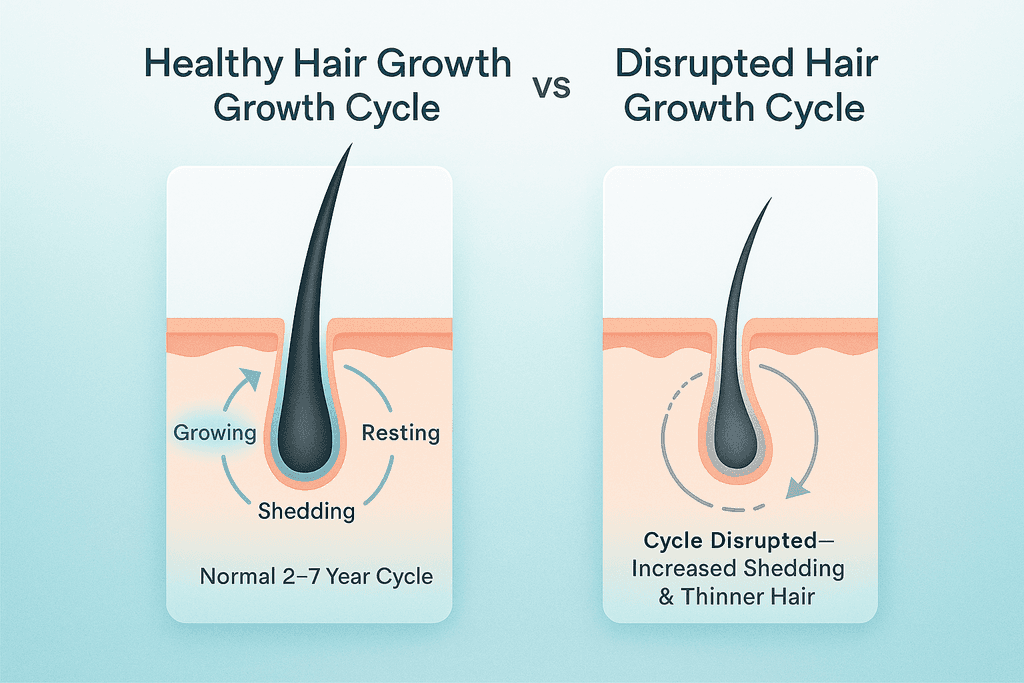
The tricky part is figuring out what's causing the disruption. Hair thinning happens when follicles either shrink over time, get stuck in the resting phase too long, or stop producing new hair altogether. Sometimes it's temporary and fixable, and sometimes it's a longer-term situation that needs ongoing care.
What Makes Hair Follicles Struggle
Think of your hair follicles like tiny factories that need the right conditions to work properly. When those conditions change, production slows down or stops. Here are the main culprits behind hair thinning:
- Genetics and hormones working together to gradually shrink follicles over time
- Not getting enough protein, iron, vitamin D, or B vitamins in your diet
- Chronic stress that pushes too many hairs into the resting phase at once
- Inflammation or poor blood flow in the scalp that starves follicles of nutrients
- Hormonal shifts from thyroid issues, pregnancy, or menopause
Your Scalp Is the Foundation
Most people focus on the hair itself, but the real action happens underneath. Your scalp needs good circulation, balanced oil production, and a healthy environment for follicles to thrive. When the scalp gets inflamed, clogged, or doesn't get enough blood flow, even healthy follicles can't do their job properly.
At Caleyo Wellness, our hair restoration treatments target both the follicle and the scalp environment to create the best conditions for regrowth. We look at the whole picture, not just one piece of the puzzle.
Temporary vs Permanent Hair Loss
Not all hair thinning is created equal. Some types respond really well to treatment, while others need a different approach. Understanding which type you're dealing with makes all the difference in preventing hair thinning tips that actually work.
| Type of Hair Loss | What It Looks Like | Main Causes | Can It Be Reversed? |
|---|---|---|---|
| Androgenetic Alopecia | Gradual thinning at crown or temples, wider part | Genetics and hormones (DHT sensitivity) | Partially - can slow and improve with treatment |
| Telogen Effluvium | Sudden overall shedding, noticeable hair loss when washing | Stress, illness, surgery, major life changes | Yes - usually grows back in 6-9 months |
| Nutritional Deficiency | Diffuse thinning, brittle or slow-growing hair | Low iron, protein, vitamin D, or B vitamins | Yes - responds well to proper nutrition |
| Stress-Related | Patchy or overall thinning, may include scalp tension | Chronic stress, poor sleep, inflammation | Yes - improves with stress management and scalp care |
The good news is that most types of hair thinning respond to non-surgical approaches when caught early. Whether you're dealing with genetics, lifestyle factors, or a combination, there are ways to treat hair loss non-surgically that actually make a difference.
Nutrition and Lifestyle Changes That Actually Work
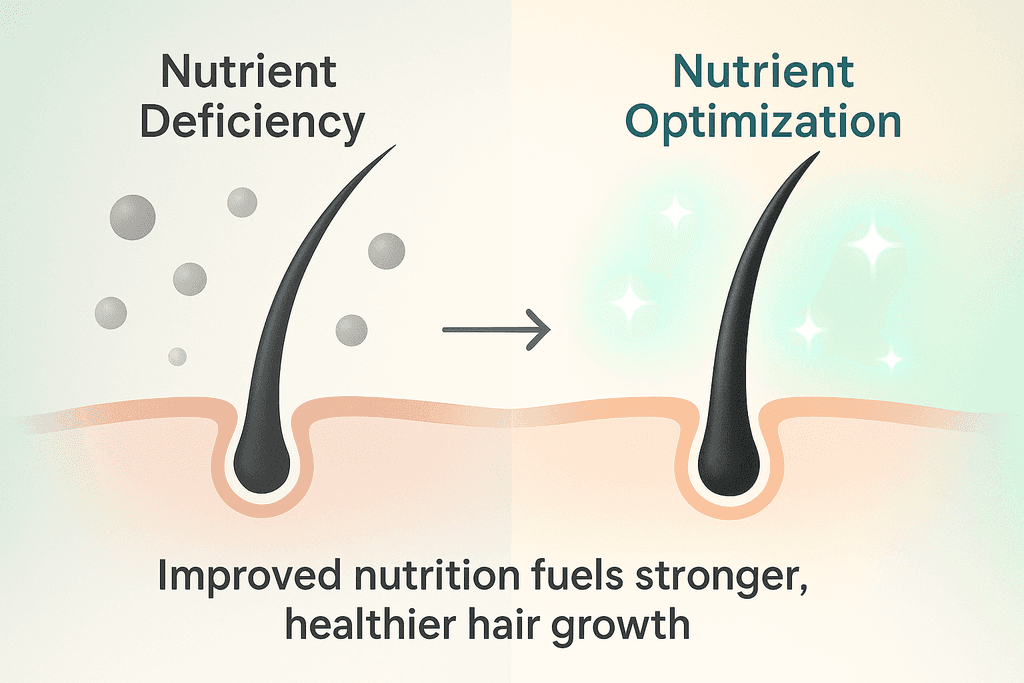
Most people don't realize that what you eat directly affects what grows on your head. Your hair follicles are some of the most metabolically active cells in your body, which means they need a constant supply of nutrients to function properly. When you're deficient in certain vitamins or minerals, your body prioritizes vital organs over hair growth, and that's when thinning starts to happen. The good news is that addressing nutritional gaps can reverse early-stage hair loss in many cases, especially when caught early.
Nutrition and Lifestyle Changes That Actually Work
Think of your hair like a plant that needs specific nutrients to thrive. Without the right building blocks, it simply can't grow strong and healthy.
- Biotin supports keratin production, the protein that makes up your hair structure
- Iron carries oxygen to hair follicles and low levels are linked to increased shedding
- Zinc regulates oil glands around follicles and supports the growth cycle
- Vitamin D helps create new follicles and may wake up dormant ones
- Protein provides the amino acids needed for hair shaft formation
Your body needs about 50 grams of protein daily just to maintain existing hair, and more if you're trying to regrow what you've lost. Foods like eggs, fish, lean meats, and legumes should be part of your regular diet if preventing hair thinning is a priority.
But nutrition is only part of the equation. Chronic stress triggers a condition called telogen effluvium, where hair follicles prematurely enter the resting phase and fall out months later. Managing stress through meditation, exercise, or therapy isn't just good for your mental health, it's essential for keeping hair on your head.
Daily Checklist for Hair Health
- Eat at least 50g of protein spread throughout the day
- Take a multivitamin with biotin, iron, and zinc (after checking levels with your doctor)
- Get 7-9 hours of quality sleep each night
- Practice 10 minutes of stress reduction (meditation, deep breathing, or gentle movement)
- Stay hydrated with at least 8 glasses of water
- Avoid crash diets or extreme calorie restriction
- Limit alcohol and processed foods that deplete nutrients
Sleep quality matters more than most people think. During deep sleep, your body releases growth hormones that repair and regenerate cells, including hair follicles. Poor sleep disrupts this process and can accelerate hair loss patterns that are already developing.
Topical Treatments and Medical-Grade Products
Once you've addressed the internal factors, topical treatments become the next line of defense for preventing hair thinning. These products work directly on the scalp and follicles, and some have decades of research backing their effectiveness. The key is understanding what actually works versus what's just marketing hype, because the hair loss industry is full of products that promise miracles but deliver nothing.
Topical Treatments and Medical-Grade Products
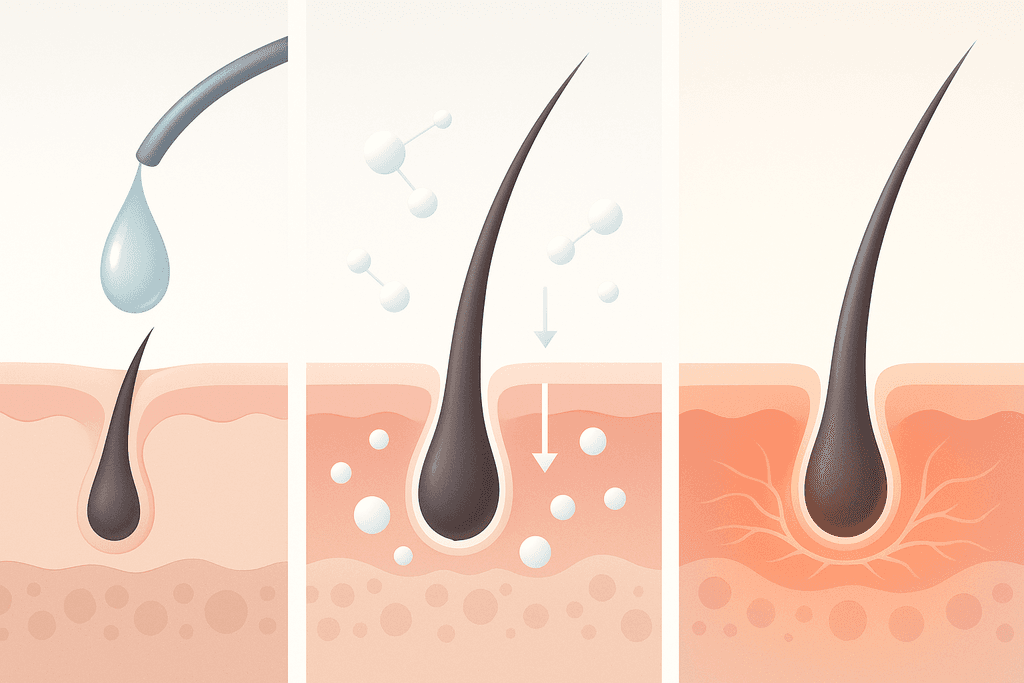
Minoxidil remains the gold standard for over-the-counter hair regrowth. It works by extending the anagen phase (the active growth period) of your hair cycle and increasing blood flow to follicles. Most people see results within 3-6 months, but you need to use it consistently or the gains disappear.
Medical-grade shampoos and serums go beyond what you'll find at a regular store. They contain active ingredients like peptides that signal dormant follicles to start growing again, or DHT blockers that prevent the hormone responsible for pattern hair loss from shrinking your follicles.
| Treatment Type | How It Works | Timeline for Results | Key Considerations |
|---|---|---|---|
| Minoxidil | Extends growth phase, increases blood flow | 3-6 months | Must use continuously, initial shedding common |
| Peptide Serums | Signals follicles, supports collagen | 2-4 months | Works well combined with other treatments |
| Prescription Options | Blocks DHT hormone systemically | 4-8 months | Requires medical supervision, potential side effects |
Scalp health is often overlooked but it's critical for hair growth. A buildup of dead skin cells, excess oil, or product residue can literally suffocate your follicles. Regular scalp exfoliation and treatments that improve circulation create an environment where hair can actually grow.
The reality is that topical treatments work best when started early. If you wait until you've lost significant density, you're trying to revive follicles that may have already shut down permanently.
Advanced Non-Surgical Treatments That Regenerate Hair
When lifestyle changes and topicals aren't enough, medical treatments offer a more aggressive approach to treat hair loss non-surgically. These procedures work by triggering your body's natural healing and regeneration processes, essentially waking up follicles that have gone dormant. The science behind these treatments is solid, and they're becoming more accessible as clinics like Caleyo Wellness bring them to patients who want real solutions without going under the knife.
Microneedling for the scalp creates tiny controlled injuries that stimulate collagen production and increase growth factor release. When combined with topical treatments, it can increase absorption by up to 300% compared to applying products alone.
Treatment Success Rates
PRP Injections: 70-80% of patients see measurable improvement in hair density after 3-4 sessions
Microneedling: Studies show 60-70% increase in hair count when combined with minoxidil
Combination Therapy: Using multiple modalities together can improve outcomes by 40-50% compared to single treatments
Platelet-rich plasma (PRP) therapy takes your own blood, concentrates the growth factors, and injects them directly into thinning areas. These growth factors signal dormant follicles to start producing hair again and strengthen existing strands. Most people need 3-4 initial treatments spaced a month apart, then maintenance sessions every 6-12 months.
Growth factor treatments and peptide injections work similarly but use lab-created compounds instead of your own blood. Low-level laser therapy is another option that uses specific wavelengths of light to energize cells and improve follicle function, though results tend to be more modest than injectable treatments.
At Caleyo Wellness, we combine multiple approaches based on your specific pattern of hair loss. The hair restoration protocols we develop might include microneedling to prep the scalp, followed by targeted injections of growth factors, and a customized topical regimen to maintain results. This multi-modal approach addresses hair loss from several angles at once, which is why it tends to work better than any single treatment alone.
Creating Your Personalized Hair Restoration Plan
Not all hair loss is the same, and that's why cookie-cutter solutions rarely work. Pattern hair loss looks different from stress-related shedding, which looks different from nutritional deficiencies or hormonal imbalances. Before you invest time and money into any treatment, you need to understand what's actually causing your hair to thin. This is where professional assessment becomes essential, because treating the wrong type of hair loss with the wrong approach wastes months you could have spent making real progress.
Identifying your specific pattern involves looking at where you're losing hair, how quickly it's happening, and what other symptoms you might have. A receding hairline and crown thinning usually points to androgenic alopecia, while diffuse thinning all over suggests telogen effluvium or nutritional issues.
- Take photos in consistent lighting every month to track changes objectively
- Note any recent life changes (stress, diet, medications, health conditions)
- Get blood work to check iron, vitamin D, thyroid, and hormone levels
- Consider your family history of hair loss patterns
The most effective hair restoration solutions combine treatments that work through different mechanisms. For example, using minoxidil to extend the growth phase while also doing PRP to strengthen follicles and taking supplements to address deficiencies creates a synergistic effect that's stronger than any single approach.
At Caleyo Wellness, we use AI-powered diagnostics to assess your scalp health and track progress with precision. This technology measures things like follicle density, scalp inflammation, and hair shaft thickness, giving us objective data to adjust your protocol as needed. It takes the guesswork out of whether treatments are actually working.
Building Your Strategy
- Schedule a professional assessment to identify your hair loss type
- Get baseline measurements and photos for tracking progress
- Start with foundational changes (nutrition, stress management, sleep)
- Add medical-grade topical treatments appropriate for your pattern
- Consider advanced treatments if topicals aren't enough after 3-4 months
- Set realistic expectations (most treatments take 3-6 months to show results)
- Plan for maintenance once you achieve your goals
Timing matters more than most people realize. Hair follicles can miniaturize to the point where they stop producing visible hair, and once they've been dormant for several years, they become much harder to revive. Starting treatment at the first signs of thinning gives you the best chance of preventing further loss and regrowing what you've lost.
The personalized protocols we create at Caleyo Wellness take into account your specific goals, budget, and lifestyle. Some people want aggressive intervention with multiple treatments, while others prefer a more conservative approach starting with lifestyle changes and topicals. Both paths can work, but having expert guidance helps you avoid wasting time on things that won't help your particular situation.
Your Path to Fuller Hair Starts Now
The good news is that you don't need to go under the knife to treat hair loss non-surgically. We've covered a lot of ground here, from understanding why hair thins in the first place to the most effective preventing hair thinning tips that actually work. The key takeaway is simple: you have options, and many of them work better when you start early.
The most effective approach usually combines multiple methods. Think of it like building a house—you need a strong foundation, not just one beam holding everything up. PRP therapy, microneedling, targeted nutrition, and medical-grade topical treatments all work together to give your hair follicles what they need to thrive.
What makes the biggest difference is working with someone who understands how these hair restoration solutions without surgery fit together. At Caleyo Wellness, our hair restoration treatments combine regenerative techniques with nutritional support and personalized skincare protocols. We look at your whole health picture, not just your scalp.
The reality is that waiting usually makes things harder. Hair follicles that have been dormant for years are tougher to wake up than ones that just started slowing down. But even if you've been dealing with thinning for a while, there's still plenty you can do.
If you're tired of watching your hair thin and want to explore what might work for your specific situation, we offer a free 15-minute discovery call. No pressure, just a conversation about what's possible and what makes sense for you.
Common Questions About Non-Surgical Hair Restoration
Most people have similar concerns when they start looking into treating hair thinning without surgery. The good news is that non-surgical options have come a long way, and understanding what to expect can help you make the right choice for your situation. Here are the questions we hear most often at our clinic.
How long does it take to see results from non-surgical treatments?
Most people start noticing improvements around the 3 to 4 month mark, though this varies based on the treatment type and your individual hair growth cycle. Treatments like PRP and microneedling work by stimulating your body's natural healing response, so results build gradually rather than appearing overnight. Some patients see subtle changes sooner, like reduced shedding or improved hair texture, before new growth becomes visible.
Can hair loss be completely reversed without surgery?
It depends on what's causing your hair loss and how long it's been happening. If your hair follicles are still alive but just dormant or weakened, non-surgical treatments can often bring them back to life. However, if follicles have been completely inactive for years, the results might be more about stopping further loss and improving what you have rather than full reversal.
Are non-surgical treatments permanent or do they require maintenance?
Most non-surgical hair restoration solutions require some level of maintenance to keep results going. Think of it like going to the gym—you get great results, but you need to keep showing up to maintain them. At Caleyo Wellness, our hair restoration programs are designed with realistic maintenance schedules that fit into your life without becoming a burden.
What's the difference between PRP and other injectable treatments?
PRP uses your own blood, which is processed to concentrate growth factors that wake up sleepy hair follicles. Other injectable treatments might use different compounds or nutrients to support scalp health and hair growth. The best approach often combines multiple methods based on what your scalp actually needs, which is why a proper consultation matters.
How much do advanced hair restoration treatments typically cost?
Costs vary widely depending on which treatments you need and how many sessions your situation requires. We offer payment plans to make these services more accessible, and we always start with a free discovery call to discuss your goals and give you a realistic idea of investment before you commit to anything.
Can these treatments work for all types of hair loss?
Different types of hair loss respond differently to treatment. Androgenetic alopecia (pattern baldness) and stress-related thinning typically respond well to non-surgical options. Conditions like alopecia areata or hair loss from medical treatments might need a different approach. That's why we start with a thorough assessment to figure out what's actually happening with your hair before recommending any specific treatment path.