What Makes Chemical Peels a Good Option for Uneven Skin Tone
Dark spots, melasma, and sun damage affect nearly 90% of adults over 30, making uneven skin tone one of the most common skin concerns people face. These discolorations happen when your skin produces too much melanin in certain areas, often triggered by sun exposure, hormones, or inflammation. Chemical peels work by removing damaged outer layers of skin, allowing fresh, evenly toned skin to surface—and at Caleyo Wellness, our chemical peels for pigmentation are customized to target your specific discoloration concerns with precision.
Table of Contents
- Understanding Skin Discoloration
- How Chemical Peels Target Pigmentation
- Types of Peels for Skin Discoloration
- What to Expect During Treatment
- Why Peels Work Better Than Other Options
- Getting Started with Chemical Peels
- Common Questions About Chemical Peels
Understanding Skin Discoloration
Your skin color comes from something called melanin, which is basically your body's natural pigment. Think of melanin like tiny paint drops that your skin cells make to protect you from the sun. Sometimes these cells get confused and start making too much melanin in certain spots, or they keep making it even when they should stop. That's when you end up with dark patches, spots, or an uneven skin tone that makeup can't quite cover up.
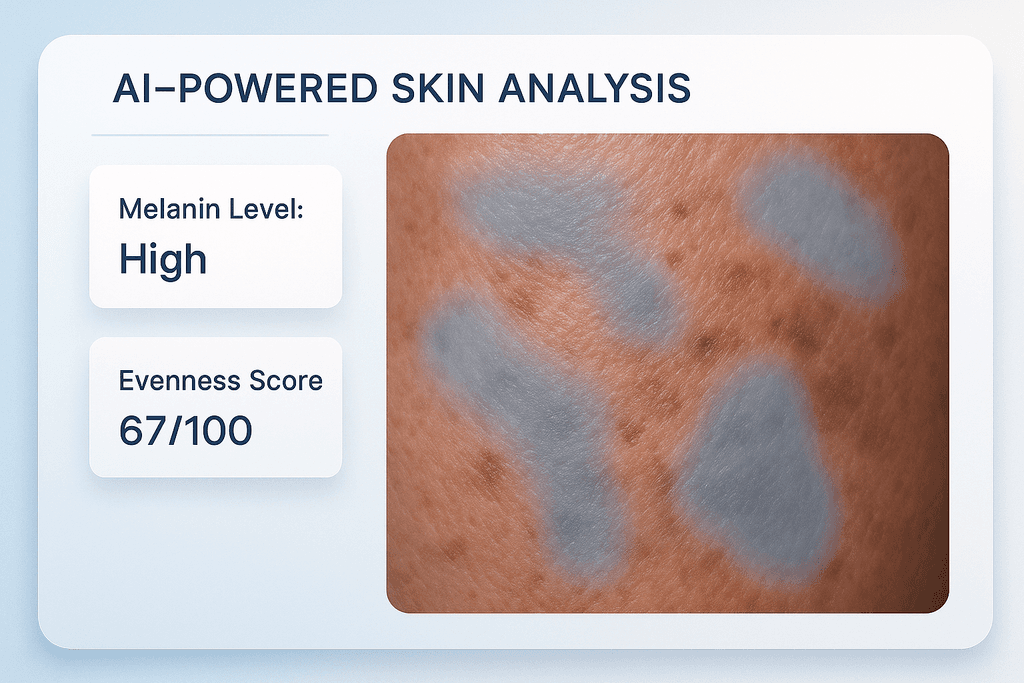
The tricky part is that different things cause different types of discoloration. Sun damage creates one kind of spot, hormones create another, and old acne scars create yet another type. Each one needs a slightly different approach to fix, which is why understanding what you're dealing with matters before you pick a treatment.
Common Types of Pigmentation
Post-inflammatory hyperpigmentation is probably the most common type people deal with. It happens after your skin gets injured or irritated, like from acne, cuts, or even aggressive skincare treatments. Your skin basically overreacts and dumps extra melanin in that spot while it's healing.
Here's what makes each type different:
- Sun spots show up on areas that get the most sun exposure, like your face, hands, and chest
- Melasma appears as larger brown or gray patches, usually on the cheeks and forehead
- Post-inflammatory marks are darker spots left behind after breakouts or skin injuries
- Age spots tend to be flat and brown, getting darker and more numerous as you get older
Why Melanin Production Goes Wrong
Your melanocytes (the cells that make melanin) can get triggered by all sorts of things. UV rays are the biggest culprit, but hormones, inflammation, and even certain medications can mess with them too. Once they're activated, they sometimes forget to turn off.
The main triggers include:
- Sun exposure without proper protection, which is the number one cause
- Hormonal changes from pregnancy, birth control, or menopause
- Skin inflammation from acne, eczema, or harsh treatments
- Natural aging processes that make pigment distribution uneven
What Chemical Peels Can Fix
Chemical peels work by removing the top layers of skin where excess pigment sits. They also tell your skin to make fresh, new cells that are more evenly colored. At Caleyo Wellness, our chemical peel treatments are customized based on your specific pigmentation type and skin tone, because what works for sun spots might not work the same way for melasma.
Research shows that newer peeling systems can significantly improve skin discoloration when applied correctly. The key is matching the right peel strength and type to your particular issue.
| Pigmentation Type | Main Causes | Appearance | Best Treated With |
|---|---|---|---|
| Sun Spots | UV exposure over time | Small, flat brown spots on sun-exposed areas | Medium-depth peels |
| Melasma | Hormones, sun, heat | Large brown or gray patches, often symmetrical | Gentle, repeated peels |
| Post-Inflammatory Hyperpigmentation | Acne, injury, inflammation | Dark marks where skin was damaged | Light to medium peels |
| Age Spots | Years of sun damage plus aging | Flat brown spots, darker than freckles | Medium-depth peels |
Not all discoloration responds the same way to peels. Some types fade quickly with just one treatment, while others need a series of gentler peels over several months. That's why getting a proper skin analysis before starting any treatment makes such a big difference in your results.
How Chemical Peels Target Pigmentation
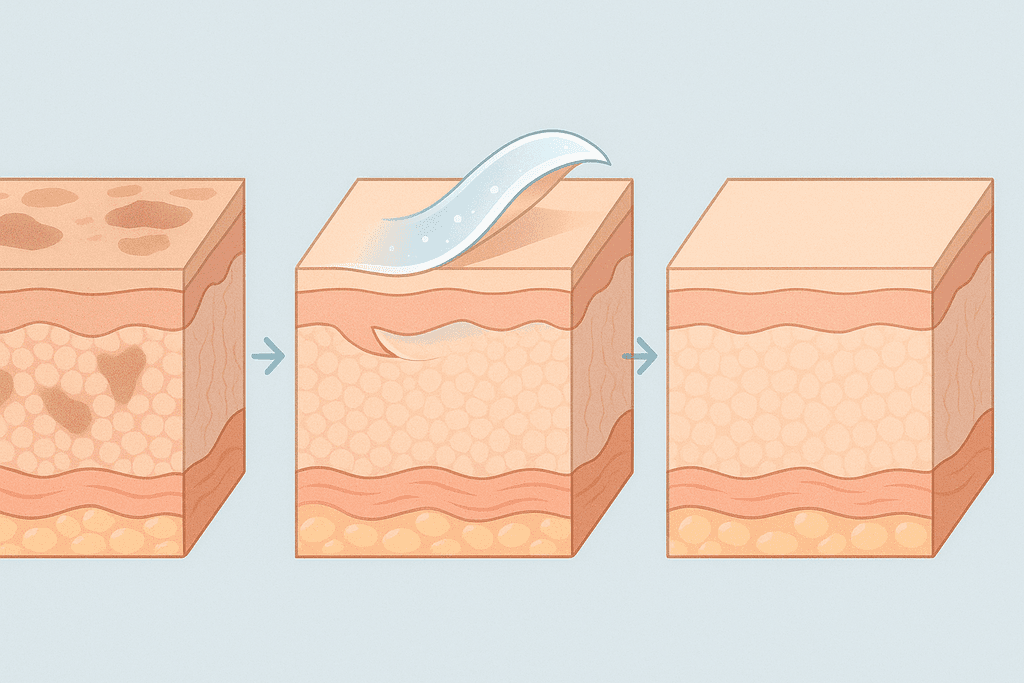
Your skin replaces itself roughly every 28 days, but sometimes that process needs a push. When dark spots, sun damage, or uneven patches settle into your skin, they're sitting in layers that won't shed on their own. Chemical peels work by removing these damaged outer layers, forcing your skin to reveal the fresher, more evenly toned cells underneath. It's not magic, just controlled exfoliation that speeds up what your body already does naturally.
How Chemical Peels Target Pigmentation
The process starts when acids break down the bonds between dead skin cells, allowing them to slough off faster than they would on their own. As these damaged layers peel away, your skin kicks into repair mode and starts producing new cells at an accelerated rate. This increased cell turnover doesn't just remove surface discoloration. It also signals your skin to reduce melanin production in areas where pigmentation has gone haywire.
Different peel depths target pigmentation at various levels:
- Superficial peels work on the outermost layer (epidermis) for mild discoloration and surface-level concerns
- Medium peels penetrate into the upper dermis, addressing more stubborn pigmentation issues
- Deep peels reach the lower dermis for severe pigmentation, though these require significant downtime
At Caleyo Wellness, the approach to chemical peels for pigmentation involves targeted resurfacing based on your specific skin concerns. Rather than applying a one-size-fits-all solution, providers assess exactly where your pigmentation sits and choose the appropriate depth to address it. This customization matters because treating surface spots with a deep peel would be overkill, while a superficial peel won't touch deeper melasma.
Clinical studies show that properly selected chemical peels can improve skin tone irregularities by 50-70% after a series of treatments, with results continuing to develop over several months as collagen remodeling occurs.
Types of Peels for Skin Discoloration
Not all acids are created equal when it comes to evening out skin tone. The type of peel that works for sun spots won't necessarily touch hormonal melasma, and what clears acne marks might be too harsh for sensitive areas. Understanding which peel addresses which concern makes the difference between seeing results and wasting time on the wrong treatment.
Types of Peels for Skin Discoloration
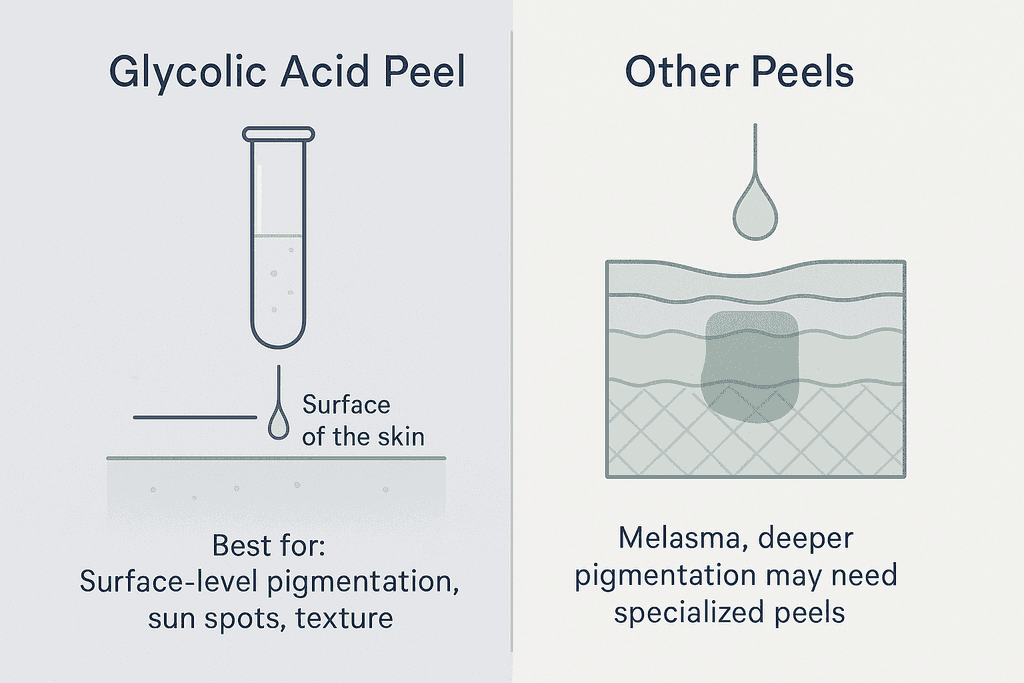
Glycolic acid peels are the workhorses for surface-level pigmentation. Derived from sugar cane, these alpha hydroxy acids have small molecules that penetrate quickly to address sun damage, age spots, and mild discoloration. They're often the starting point for evening out skin tone options because they're effective yet relatively gentle. Most people can return to normal activities within a day or two.
TCA (trichloroacetic acid) peels go deeper and pack more punch for stubborn discoloration that won't budge with gentler options. These medium-depth peels can address more significant pigmentation issues, including some types of melasma and post-inflammatory hyperpigmentation. The tradeoff is more downtime, usually about a week of visible peeling.
For acne-related pigmentation, salicylic acid peels offer a targeted approach. This beta hydroxy acid is oil-soluble, meaning it can penetrate into pores where acne starts. It not only helps fade the dark marks left behind by breakouts but also prevents new ones from forming. Research on chemical peels for darker skin tones shows that salicylic acid tends to be safer for melanin-rich skin compared to some other options.
| Peel Type | Strength | Downtime | Best For |
|---|---|---|---|
| Glycolic Acid | Light to Medium | 1-3 days | Sun damage, age spots, mild discoloration |
| TCA | Medium to Deep | 5-7 days | Stubborn pigmentation, melasma, deeper discoloration |
| Salicylic Acid | Light to Medium | 2-4 days | Acne marks, oily skin, post-inflammatory hyperpigmentation |
| Combination Peels | Varies | 3-7 days | Complex pigmentation, resistant melasma |
Combination peels mix different acids to tackle complex pigmentation issues from multiple angles. These are particularly useful for resistant melasma, which often requires a multi-pronged approach. At Caleyo Wellness, providers customize peel selection based on your skin type, the nature of your discoloration, and your tolerance for downtime. This personalized approach to selecting the best peel for skin discoloration means you're not getting a generic treatment but one designed for your specific concerns.
What to Expect During Treatment
The journey to even skin tone starts before any acid touches your face. During your initial consultation, a thorough skin analysis identifies exactly what type of pigmentation you're dealing with and where it sits in your skin layers. This isn't guesswork. At Caleyo Wellness, an AI-powered skin analysis system evaluates hydration, elasticity, pigmentation patterns, and other metrics to create a detailed map of your skin's current state. This data drives the treatment plan rather than assumptions.
The actual peel application is surprisingly quick, usually taking 15-30 minutes depending on the type and area being treated. Your provider applies the solution evenly across treatment areas, and you might feel tingling, warmth, or mild stinging. The sensation varies based on peel strength, but it's temporary and manageable. Once the solution has done its work, it's neutralized or simply stops working on its own, depending on the type used.
Here's what your skin goes through after treatment:
- Days 1-2: Skin looks slightly red or pink, similar to a mild sunburn
- Days 3-4: Peeling begins, usually starting around the mouth and nose
- Days 5-7: Most visible peeling occurs (don't pick at it)
- Days 7-14: New skin is revealed, looking fresh but potentially sensitive
- Weeks 2-8: Continued improvement as cell turnover normalizes and pigmentation fades
Results don't appear overnight. While you'll see some improvement once the peeling stops, the real changes develop over the following weeks as your skin continues its renewal process. Clinical research on chemical peel fundamentals shows that collagen remodeling and pigment reduction continue for up to three months after treatment.
Sun protection becomes non-negotiable after a chemical peel. Your new skin is more vulnerable to UV damage, and sun exposure can actually worsen pigmentation rather than improve it. This means daily broad-spectrum SPF 30 or higher, reapplied every two hours when outdoors. Skipping this step can undo all the progress your peel achieved.
Most people need a series of peels rather than just one to see significant improvement in uneven skin tone. The exact number depends on your starting point and goals, but three to six treatments spaced several weeks apart is common. The personalized approach at Caleyo Wellness means your provider tracks your progress and adjusts the treatment plan as your skin responds, ensuring you're always moving toward your goals rather than following a rigid protocol that might not fit your needs.
Why Peels Work Better Than Other Options
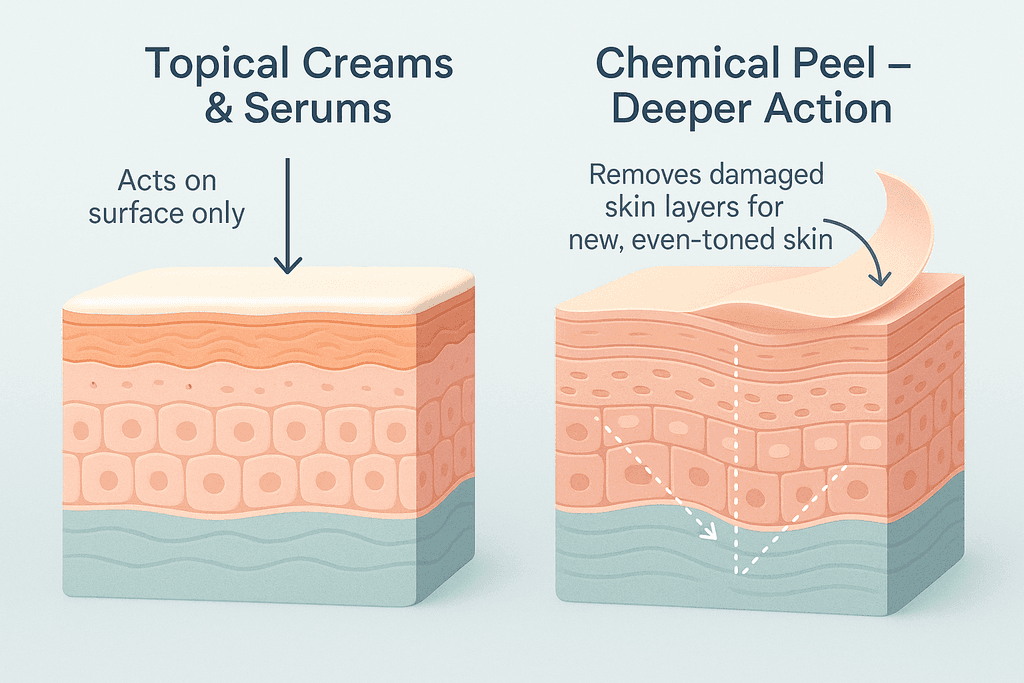
When you're dealing with uneven skin tone, you've probably tried a dozen different creams and serums that promised results but barely made a dent. The truth is, topical products can only penetrate so far into your skin—usually just the surface layer. Chemical peels for pigmentation work differently because they actually remove damaged skin layers, forcing your body to create fresh, even-toned skin underneath. It's like the difference between painting over a stained wall versus stripping it down and starting fresh. Most over-the-counter products take months to show minimal improvement, while peels can deliver visible changes in weeks.
Laser treatments often come up as an alternative, but they're not always the best choice for everyone. Lasers can be risky for darker skin tones because they use heat and light that can sometimes cause more pigmentation problems instead of fixing them. Peels offer more flexibility here.
- Peels can be customized for any skin tone with the right formulation
- They don't carry the same risk of heat-induced hyperpigmentation
- Recovery time is often shorter than with aggressive laser treatments
- The results are more predictable because providers can control the depth precisely
Cost is another factor that makes the best peel for skin discoloration stand out. A single laser session can run thousands of dollars, and you usually need multiple treatments. Chemical peels typically cost a fraction of that, and many people see results after just one or two sessions. Research from medical centers shows that peels provide consistent, measurable improvements in pigmentation when performed by trained providers.
The real advantage comes from how peels can work with other treatments. At Caleyo Wellness, chemical peels are often combined with treatments like microneedling or skin boosters to tackle pigmentation from multiple angles. This layered approach means you're not just masking the problem—you're addressing it at different skin depths for longer-lasting results.
Chemical Peels vs Other Treatments
Advantages of Chemical Peels:
- Work on all skin tones when properly selected
- More affordable than laser treatments
- Can be combined with other therapies
- Predictable, controlled results
- Shorter recovery than aggressive procedures
Limitations to Consider:
- Require some downtime for peeling and healing
- May need multiple sessions for deep pigmentation
- Not suitable during active breakouts or infections
Getting Started with Chemical Peels
Chemical peels work because they target pigmentation at different depths of your skin, depending on the strength and type of peel used. The acids break down the bonds between dead skin cells and trigger your body's natural healing response, which brings fresh, evenly toned skin to the surface. This process is why chemical peels for pigmentation remain one of the most reliable treatments for uneven skin tone. But here's the thing that matters most: not all peels are created equal, and what works for someone else might not work for you.
The best peel for skin discoloration depends entirely on your specific skin type, the depth of your pigmentation issues, and how your skin responds to treatment. That's why working with experienced providers who understand the science behind evening out skin tone options makes such a difference in your results. They can assess your skin properly and choose the right peel strength and formulation for your needs.
At Caleyo Wellness, our chemical peel treatments are customized based on a thorough skin analysis, and we guide you through the entire process from consultation to aftercare. If you're dealing with stubborn dark spots, melasma, or general unevenness that won't respond to over-the-counter products, a professional peel might be exactly what your skin needs.
We offer a free 15-minute discovery call where you can discuss your skin concerns and find out which treatment approach would work best for you. Sometimes all it takes is one conversation to figure out the right path forward.
Common Questions About Chemical Peels
If you're thinking about getting a chemical peel for uneven skin tone, you probably have some questions. Most people do, especially when it comes to safety and what kind of results to expect. Here are the answers to the most common questions we hear at our clinic about using chemical peels for pigmentation and skin discoloration.
How many treatments do I need to see results?
Most people need between 3 to 6 treatments spaced about 4 to 6 weeks apart to see significant improvement in uneven skin tone. Lighter peels might require more sessions, while deeper medical-grade peels can show results faster but need more recovery time. Your skin type and the severity of your pigmentation will determine the exact number.
Are chemical peels safe for darker skin tones?
Yes, but it requires expertise and the right type of peel. Darker skin tones have a higher risk of post-inflammatory hyperpigmentation if the peel is too aggressive or not properly customized. At Caleyo Wellness, we use our AI-powered Skin Analysis System to evaluate your specific skin needs and choose the safest peel formulation for your tone. We work with all skin tones and adjust treatment intensity accordingly.
What's the difference between a spa peel and a medical-grade peel?
Spa peels are typically superficial with lower acid concentrations, giving you a temporary glow but minimal impact on deeper pigmentation issues. Medical-grade peels use higher concentrations of active ingredients and penetrate deeper layers of skin to actually address the root cause of discoloration. They're administered by trained medical professionals who can monitor your skin's response and adjust treatment as needed.
Can chemical peels make my pigmentation worse?
They can if done incorrectly or without proper aftercare. This is why choosing an experienced provider matters so much. Skipping sun protection after a peel or using the wrong peel strength for your skin type can trigger more pigmentation. We always provide detailed aftercare instructions and medical-grade skincare products to protect your results.
How long do results from chemical peels last?
Results can last several months to over a year, depending on the peel depth and how well you maintain your skin afterward. Sun exposure, hormones, and aging will continue to affect your skin, so many people do maintenance peels every few months. Consistent sun protection and a good skincare routine will help your results last longer.
What's the best time of year to get a chemical peel?
Fall and winter are ideal because there's less sun exposure and UV intensity. Your skin will be more sensitive after a peel, and sun damage can reverse your results or cause new pigmentation. That said, you can get peels year-round if you're diligent about sunscreen and sun avoidance. We offer personalized skincare consultations to help you time your treatments right and protect your investment in evening out skin tone.