What to know before starting a medical weight management program

Most people who try to lose weight on their own regain it within a year, but medical weight management information shows that doctor-led programs have success rates up to three times higher. The difference comes down to personalized treatment plans, prescription options, and ongoing clinical support that DIY diets simply can't offer. At Caleyo Wellness, our dual board-certified providers combine medical oversight with nutrition expertise and advanced body tracking technology to create weight loss program expectations that are both realistic and sustainable.
Table of Contents
- Understanding Medical Weight Management Programs
- Your Initial Assessment and What to Expect
- Treatment Options and Personalized Approaches
- Realistic Timelines and Progress Tracking
- Lifestyle Changes and Long-Term Commitment
- Making the Right Decision for Your Health
- Your Next Steps Toward Sustainable Weight Loss
- Common Questions About Medical Weight Management
Understanding Medical Weight Management Programs
Medical weight management is a supervised approach to losing weight that involves licensed healthcare providers like doctors, nurse practitioners, or physician assistants. Unlike the diet plans you see advertised on TV or social media, these programs are run by people with actual medical training who can prescribe medications, order lab tests, and monitor your health throughout the process. At Caleyo Wellness, our dual board-certified providers Emmanuel Pelayo, NP-C, RDN, and Jaime Calderon, PA-C, combine medical expertise with nutritional science to create personalized plans. The difference between working with a medical professional and following a commercial diet is like the difference between having a custom suit tailored for you versus buying something off the rack and hoping it fits.
Who Can Provide Medical Weight Management
Not everyone who talks about weight loss is qualified to provide medical weight management information. Only certain healthcare professionals have the training and legal authority to offer these services.
- Physicians (MDs and DOs) who specialize in obesity medicine or internal medicine
- Nurse Practitioners (NPs) with board certification and prescriptive authority
- Physician Assistants (PAs) working under medical supervision
- Registered Dietitians (RDNs) who provide nutritional counseling as part of the medical team
- Endocrinologists who focus on metabolic and hormonal factors affecting weight
How Medical Programs Differ from Commercial Diets
The science-backed approach used in clinical settings goes way beyond counting calories or cutting carbs. Medical providers look at your complete health picture including bloodwork, metabolism, hormones, medications, and underlying conditions that might make weight loss harder. They can prescribe FDA-approved medications that actually change how your body processes food and manages hunger, something no commercial program can legally do.
Commercial programs often use a one-size-fits-all approach because they're designed for mass markets. Medical weight management programs create individualized plans based on your specific body chemistry and health needs.
Comparing Your Options
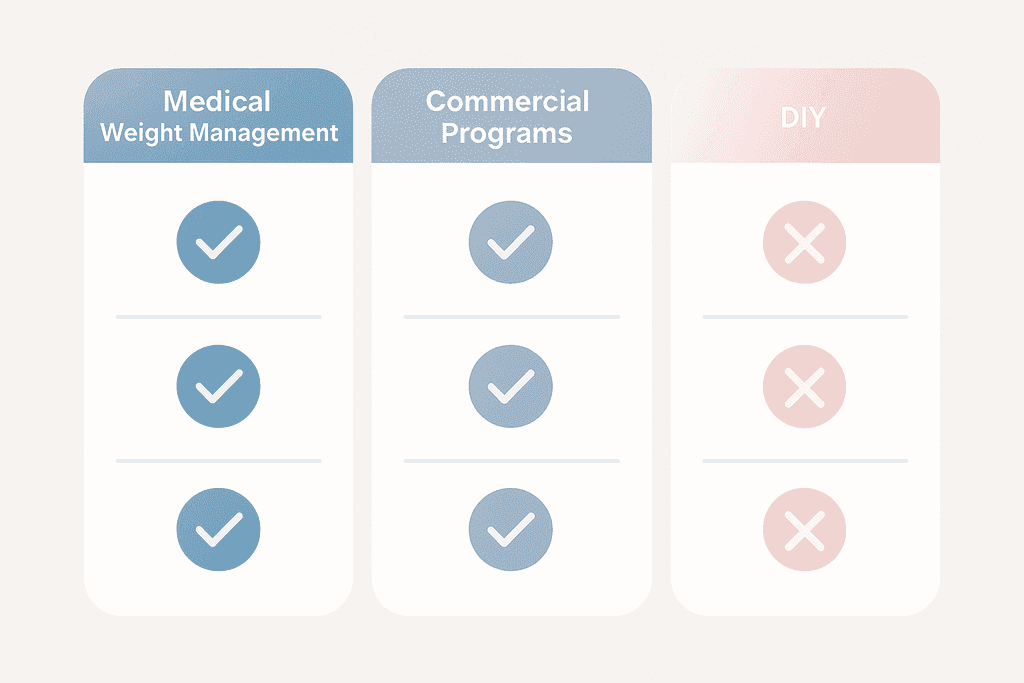
When you're trying to figure out which path makes sense for your weight loss program expectations, it helps to see the differences laid out clearly. Here's how the three main approaches stack up against each other.
| Feature | Medical Weight Management | Commercial Programs | DIY Approaches |
|---|---|---|---|
| Provider Credentials | Licensed medical professionals (NPs, PAs, MDs) | Health coaches or counselors | Self-directed |
| Personalization | Fully customized based on labs and health data | Limited to basic questionnaires | Trial and error |
| Medication Options | Prescription medications available | Only supplements | Over-the-counter only |
| Medical Monitoring | Regular health screenings and adjustments | None | None |
| Technology Integration | 3D body scanning, AI analysis, metabolic testing | Basic apps and scales | Consumer fitness trackers |
| Underlying Health Issues | Addressed as part of treatment | Not evaluated | Not evaluated |
| Average Success Rate | Higher with medical supervision | Moderate, high dropout | Low long-term success |
The Clinical Approach to Weight Loss
Doctor led weight loss decisions start with understanding why your body holds onto weight in the first place. Medical providers run tests to check thyroid function, insulin resistance, cortisol levels, and other factors that commercial programs completely ignore. They also review your medication list because some common drugs for blood pressure, depression, or diabetes can actually cause weight gain as a side effect.
The clinical setting also means access to tools that aren't available elsewhere. Programs like our ShapeShift & Sustain use AI-powered 3D body scanning technology to track changes in your body composition with incredible precision, showing you exactly where you're losing fat versus muscle.
- Comprehensive lab work to identify metabolic barriers
- Prescription medications that work with your body's chemistry
- Regular monitoring to catch and address problems early
- Integration with other health treatments you might need
Your Initial Assessment and What to Expect
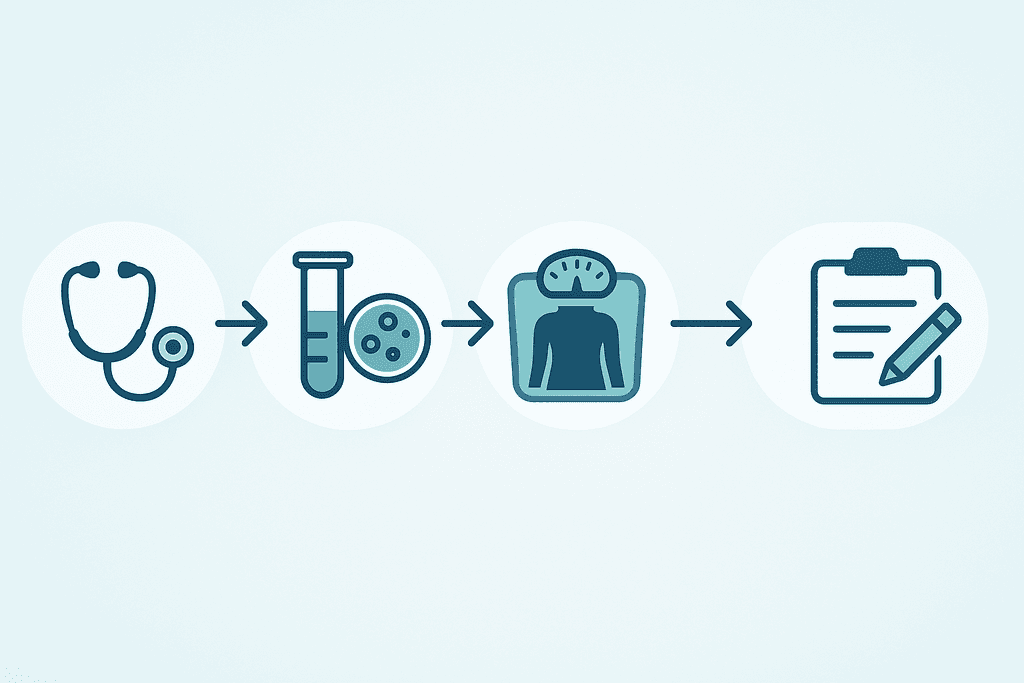
Most people think medical weight management starts with a prescription and a handshake, but the reality is much more thorough. Your first visit is actually a deep dive into your health history, current lifestyle, and what's been holding you back from reaching your goals. The provider will review your complete medical background, including any chronic conditions, previous weight loss attempts, current medications, and family health patterns. This isn't just paperwork—it's detective work to figure out why your body has been resistant to change. You'll also undergo a physical examination and discuss your relationship with food, stress levels, sleep quality, and daily routines. The goal is to see the complete picture, not just the number on the scale.
Your Initial Assessment and What to Expect
Laboratory testing is a critical part of this initial phase. Blood work helps identify metabolic issues, hormone imbalances, nutrient deficiencies, and other underlying factors that might be sabotaging your weight loss efforts.
- Thyroid function tests to check metabolism regulation
- Fasting glucose and insulin levels to assess metabolic health
- Lipid panels for cardiovascular risk factors
- Vitamin and mineral levels to identify deficiencies
- Hormone panels when appropriate
At Caleyo Wellness, this assessment goes beyond traditional methods with AI-powered 3D body scanning technology. Instead of relying solely on weight or BMI, the 3D scanner captures precise body composition data, measurements, and high-definition visualizations of your current state. This creates a baseline that's far more accurate than any tape measure or scale reading alone. The data becomes the foundation for your personalized plan and helps track changes that might not show up on a regular scale.
During this first visit, you'll also set realistic goals with your provider. This conversation matters more than you might think—it's where expectations get aligned with what's actually achievable and sustainable.
What to Bring to Your First Consultation
- List of current medications and supplements
- Recent lab work if available
- Food diary from the past week (if possible)
- Questions about the program and your concerns
- Insurance information and ID
Treatment Options and Personalized Approaches
Medical weight management isn't a single treatment—it's a combination of tools tailored to your specific situation. The approach varies dramatically from person to person because what works for one body might not work for another. Some people respond well to certain medications while others need a different combination entirely. Prescription medications and metabolic boosters have become more sophisticated in recent years, with options like GLP-1 receptor agonists that work with your body's natural hunger and satiety signals. These aren't the diet pills of decades past—they're medications that address the biological mechanisms behind weight regulation.
Nutritional counseling forms the backbone of any successful program. Working with registered dietitian input means you're not following a generic meal plan pulled from the internet.
The nutrition component addresses:
- Personalized macronutrient ratios based on your metabolism
- Meal timing strategies that fit your schedule
- Food preferences and cultural considerations
- Practical cooking and meal prep guidance
- Strategies for dining out and social situations
Beyond food and medication, IV therapy and wellness infusions can support your metabolic function and energy levels during weight loss. These aren't required for everyone, but they can help address nutrient gaps and support your body through the changes. Supplementation protocols are also customized based on your lab work—if you're deficient in vitamin D or B12, for example, that gets addressed as part of your overall plan.
What makes medical programs different from DIY approaches is the constant adjustment based on data. At Caleyo Wellness, the combination of medical oversight with nutrition expertise means your plan evolves as you do. If something isn't working after a few weeks, the approach changes rather than you just trying harder at something that's not effective for your body.
Realistic Timelines and Progress Tracking
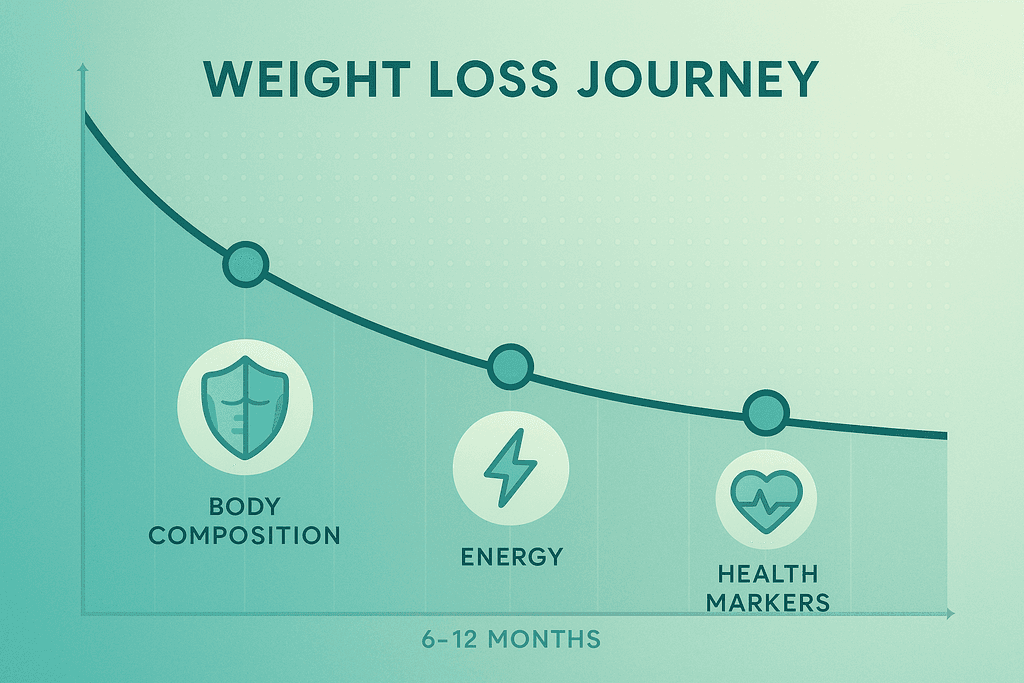
Here's what nobody wants to hear but everyone needs to know—sustainable weight loss typically happens at a rate of one to two pounds per week. That might sound slow compared to dramatic transformations you see online, but it's what actually lasts. Rapid weight loss often means you're losing muscle mass along with fat, which tanks your metabolism and sets you up for regain. The tortoise really does win this race, even though the hare gets more attention on social media.
Realistic Timelines and Progress Tracking
Progress tracking in a medical program goes way beyond stepping on a scale once a week. Your provider monitors multiple data points to get the full story of what's happening in your body.
Key metrics tracked throughout your program:
- Body composition changes (fat mass vs. lean mass)
- Circumference measurements at multiple body sites
- Energy levels and quality of life indicators
- Lab values like blood sugar and cholesterol
- Blood pressure and resting heart rate
- Sleep quality and stress levels
The 3D body scanning technology provides something traditional methods can't—precise visual and numerical tracking of changes that might not show up on the scale. You might lose inches from your waist while gaining muscle in your legs, which could mean minimal weight change but significant body composition improvement. Research on primary care weight loss programs shows that comprehensive tracking and regular monitoring significantly improve outcomes compared to less structured approaches.
Follow-up appointments typically happen every two to four weeks initially, then space out as you progress. These check-ins are when your treatment plan gets adjusted based on how your body is responding. If weight loss stalls, your provider might adjust medication dosages, modify your nutrition plan, or investigate other factors that could be interfering with progress.
Lifestyle Changes and Long-Term Commitment
The hardest truth about medical weight management is that medication and medical oversight are tools, not magic solutions. Sustainable results require changes to how you eat, move, sleep, and manage stress. The good news is that these changes don't happen all at once—they're implemented gradually so they actually stick. You're not expected to overhaul your entire life on day one. Instead, you work with your provider to identify the highest-impact changes and build from there. Maybe you start by adding protein to breakfast and walking ten minutes daily, then layer in more changes as those become habits.
Physical activity recommendations are tailored to where you're starting from. If you haven't exercised in years, nobody's going to tell you to hit the gym five days a week.
- Movement plans that match your current fitness level
- Gradual progression to avoid injury and burnout
- Focus on activities you might actually enjoy
- Integration of movement into daily life, not just formal exercise
Sleep and stress management often get overlooked, but they're just as important as diet and exercise. Poor sleep disrupts hunger hormones and makes everything harder. Chronic stress keeps cortisol elevated, which can interfere with weight loss and promote fat storage around your midsection. The functional medicine approach at Caleyo Wellness addresses these root causes rather than just treating symptoms.
The transition to maintenance is where many programs fail their patients, but it's actually the most important phase. Once you've reached your goal, the focus shifts to sustaining those results long-term. This isn't about white-knuckling your way through life—it's about having built habits and systems that support your new normal. Studies on weight management service design emphasize that ongoing support and accountability are critical for preventing regain.
Essential Lifestyle Factors for Success
- Consistent meal timing and balanced nutrition
- Regular physical activity you can maintain
- Seven to nine hours of quality sleep nightly
- Stress management practices that work for you
- Strong support system and accountability
- Regular follow-up with your healthcare team
Medical weight management works best when you view it as a partnership with your healthcare providers. They bring the medical expertise, monitoring, and treatment options. You bring the commitment to showing up and implementing the changes. Together, that combination creates results that actually last.
Making the Right Decision for Your Health
Choosing a medical weight management program isn't like picking a gym membership. You're trusting someone with your health, your body, and often a significant financial investment. The difference between a program that works and one that leaves you frustrated often comes down to the provider's qualifications and approach. Not all medical weight management programs are created equal, and knowing what to look for can save you time, money, and disappointment.
Who Benefits Most from Medical Weight Management
Medical weight management programs work best for specific types of people. If you've tried diet and exercise alone without lasting results, or if you have health conditions affected by weight, you're likely an ideal candidate.
- Adults with a BMI over 27 who have weight-related health issues
- People who need medical supervision due to medications or chronic conditions
- Anyone seeking data-driven, measurable progress rather than guesswork
- Individuals ready to commit to lifestyle changes alongside medical interventions
Warning Signs When Evaluating Providers
Some red flags should make you walk away immediately. Programs that promise rapid weight loss without medical oversight or those that push a single solution for everyone aren't worth your time.
- Providers without proper medical credentials or board certifications
- One-size-fits-all programs with no personalization
- Lack of ongoing monitoring or follow-up care
- No clear explanation of potential risks or side effects
- Pressure to commit before you've had time to evaluate
Essential Questions for Your Consultation
Your initial consultation should feel like a conversation, not a sales pitch. A quality provider will welcome your questions and take time to explain their approach in detail.
Questions to Ask When Evaluating Medical Weight Management Providers
- What are your medical credentials and certifications?
- How do you personalize programs for individual patients?
- What technology or tools do you use to track progress?
- How often will I have follow-up appointments?
- What happens if I experience side effects or complications?
- Do you offer nutrition counseling as part of the program?
- What are the total costs, and do you offer payment plans?
- How do you measure success beyond just the number on the scale?
Why Credentials and Technology Matter
Dual board-certified providers bring multiple areas of expertise to your care. At Caleyo Wellness, having both a board-certified nurse practitioner who's also a registered dietitian and a board-certified physician assistant means you get medical and nutritional guidance in one place. The integration of technology like 3D body scanning and AI diagnostics takes the guesswork out of medical weight management information, giving you concrete data about your progress.
Payment options matter too. Advanced medical weight management shouldn't be out of reach because of cost, which is why many clinics now offer payment plans and transparent pricing discussions during free discovery calls.
Your Next Steps Toward Sustainable Weight Loss
Medical weight management information can feel overwhelming when you're just starting out, but the core message is simple. Having a doctor or qualified healthcare provider guide your weight loss journey makes a real difference in both safety and results. You're not just getting a prescription and being sent on your way. You're getting someone who monitors your progress, adjusts your plan when needed, and catches potential issues before they become problems. That level of oversight is something you just can't replicate with over-the-counter options or doing it alone.
The best weight loss program expectations should include personalized care based on your actual body composition and health markers, not generic advice. At Caleyo Wellness, our Medical Weight Management program uses 3D Precision Body Tracking to measure exactly what's changing in your body over time. This data-driven approach means your plan evolves with you, not against you.
When you're making doctor led weight loss decisions, the provider's qualifications matter more than most people realize. Look for dual board-certified professionals who understand both the medical and nutritional sides of weight management. The right team should offer comprehensive services under one roof, from metabolic medications to lifestyle counseling to body composition tracking.
If you're ready to explore what medical weight management could look like for you, the easiest first step is a conversation. We offer a free 15-minute discovery call where you can ask questions, discuss your goals, and see if this approach fits your needs. No pressure, just information. Sometimes the hardest part is just picking up the phone, but that one call might be what finally gets you unstuck.
Common Questions About Medical Weight Management
Starting a medical weight management program brings up a lot of questions, especially if you've tried other approaches before. The process is different from what you might find at a typical gym or diet program, and understanding what makes it unique can help you decide if it's the right fit. Here are the most common questions people ask before they begin their journey with doctor led weight loss decisions.
How is medical weight management different from other programs?
Medical weight management information shows that these programs are supervised by healthcare providers who can prescribe medications, order lab work, and monitor your health throughout the process. Unlike commercial diet plans, you get personalized treatment based on your metabolism, medical history, and body composition. At Caleyo Wellness, we use 3D body scanning technology to track your progress with actual data, not just a scale number.
Do I have to take medications?
Not always. Medications are one tool in the toolbox, but they're not required for everyone. Your provider will assess whether medications make sense based on your health status, weight loss goals, and how your body responds to nutrition and lifestyle changes. Some people do great with just dietary counseling and metabolic support, while others benefit from adding medication to their plan.
How long does a typical program last?
Most medical weight management programs run anywhere from three to twelve months, depending on how much weight you want to lose and your individual response. The commitment level varies, but expect regular check-ins with your provider, especially in the first few months. Weight loss isn't a sprint, and sustainable results take time to build the right habits.
What about side effects and safety?
Any medical treatment can have side effects, but that's why you're working with trained providers who monitor you closely. Common side effects from weight loss medications might include nausea, digestive changes, or fatigue, but most are manageable and temporary. Your provider will adjust your treatment plan if something isn't working well for your body.
How much does medical weight management cost?
Costs vary based on which services and medications you need, but weight loss program expectations should include an investment in your health. Payment plans are available at most clinics, including Caleyo Wellness, to make the programs more accessible. A free discovery call can help you understand the financial commitment before you start.
What happens after I reach my goal weight?
Reaching your goal is just the beginning of maintenance, which is often the hardest part. Medical weight management programs include transition plans to help you sustain your results long-term. This might mean adjusting medications, continuing nutrition counseling, or using ongoing body composition tracking to catch any changes early. The goal is to keep you at your healthiest weight for life, not just for a few months.